
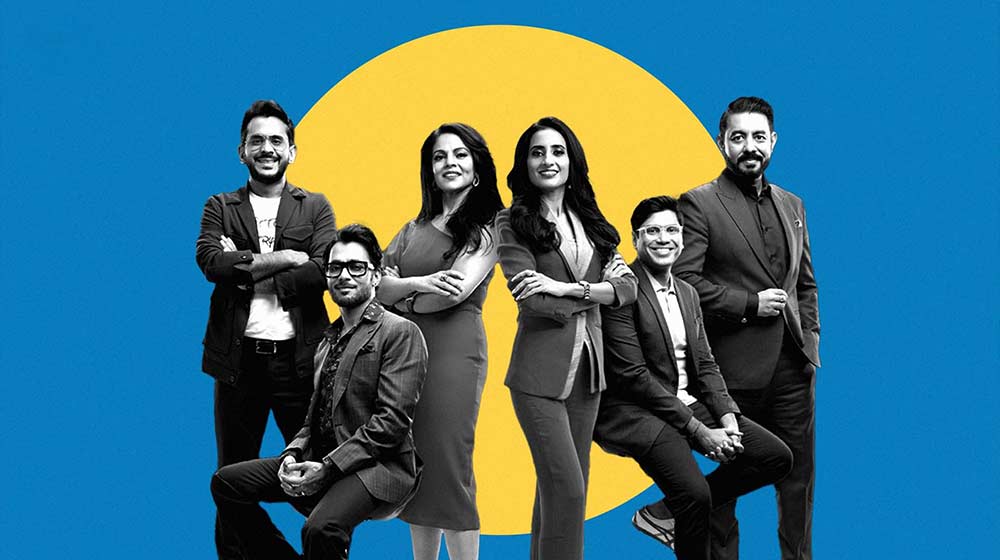
Shark Tank India conquered popularity in its very first season within just 15 days of airing! It was only Week 2 when entrepreneurship, startup jargon, and the personality of the judges became household conversations. This show brought a breather to the otherwise cluttered reality show space filled with sob stories. As Anupam Mittal once said, “For a business to be successful, the product matters, but what matters equally is the timing!”

Now that the show has progressed through five editions as of early 2026, let’s look at how the “Shark Tank effect” has evolved.
The Shift in Business Valuations
The first season saw almost all businesses with a total valuation of 5–10 Crores at max. Usual offers involved asks of 40–50 lakhs for a sweeping equity of 30–40%. For instance, Peyush Bansal struck a deal with “Isak Fragrances” for 50% equity. However, by Season 4 and 5, the tables turned. The tank now hosts established brands with valuations ranging from 20–50 crores. Equity asks have dropped to 0.25% to 7%, showing that the show is now a serious platform for scale-up capital rather than just seed funding.
The “Deepinder Effect” and Sponsor Rivalries
The selling factor of the show initially relied on simplifying business terms. Nevertheless, the “Sharks” themselves became the primary hook. Season 3 saw the entry of Deepinder Goyal (Zomato CEO), who brought a “no-nonsense” attitude that reminded many of the Season 1 honesty. Interestingly, corporate rivalries spilled into the show by Season 4. Because Swiggy became the primary sponsor for Season 4, Deepinder Goyal was “kicked out” of the panel due to a conflict of interest. This shift highlighted how the show itself became a battleground for India’s tech giants.

The structure of deals has seen a massive evolution. While early seasons focused on pure equity, later seasons introduced the “Royalty Component” more frequently. Pitchers initially struggled with this, but by Season 4, many came prepared to negotiate “recoupment” terms. Furthermore, debt has seen much higher acceptance. In Season 5, larger companies readily accept debt at 10–12% interest rather than diluting precious equity, a stark contrast to the equity-heavy deals of 2021.
The Sharks have leveraged their celebrity status for their own brands. Aman Gupta and Peyush Bansal now feature in their own ad campaigns, turning their “face value” into a marketing strategy. Additionally, former Shark Ashneer Grover transitioned into a full-time influencer and speaker, monetizing the “no-filter” brand he built on the show. Even the newer Sharks like Ritesh Agarwal (OYO) and Kunal Bahl (Snapdeal) use their presence to build personal brands that rival Bollywood stars.

Shark Tank India has been a knowledgeable experience for the youth. In the first season, viewers viewed sharks with unquestioned appreciation. Over time, the audience has started playing along as “household sharks,” often questioning the judges’ decisions on social media. While some believe the raw honesty of Season 1 is gone, the record-breaking viewership of Season 4—which beat Bigg Boss OTT 3 by 102%—proves the format is here to stay.