India Eid ul Adha restrictions cover cow slaughter, open prayers, and public sacrifices as authorities roll out strict enforcement measures
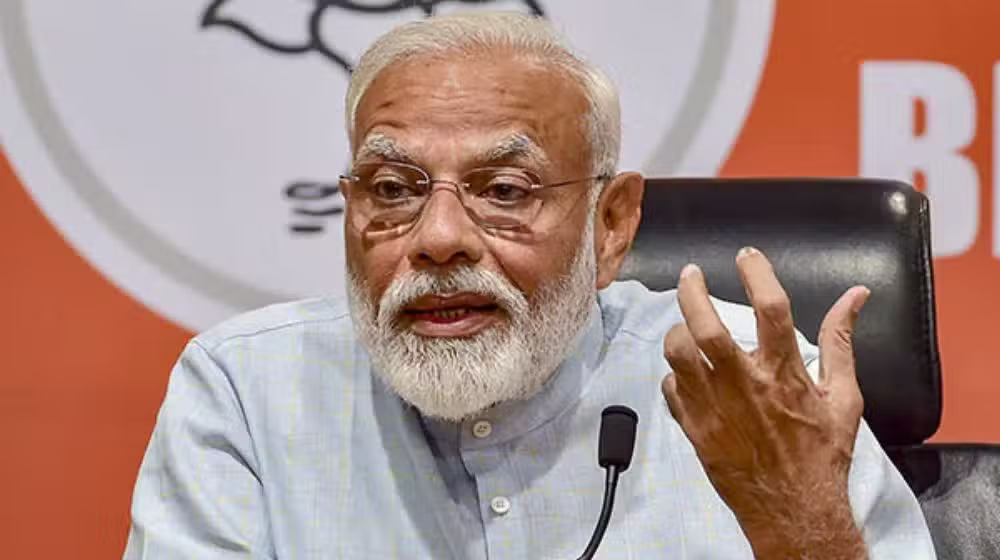
India introduced sweeping new restrictions on Muslims ahead of Eid ul Adha. The measures include a complete ban on cow and camel slaughter, tight controls on sacrifice locations, and a prohibition on open-air prayers. The India Eid ul Adha restrictions raise serious concerns about religious freedoms for the country’s Muslim population during one of Islam’s most sacred festivals. Moreover, authorities are moving aggressively to enforce every element of the crackdown.
Chief Minister Yogi Adityanath chaired a high-level law and order meeting via video conference. He instructed district administrations to enforce all measures strictly. Furthermore, he ordered that Eid prayers must only take place at traditional mosque locations. No namaz on roads will be permitted under any circumstances. He also stressed that no new traditions should emerge during the festival.
The Uttar Pradesh government issued a series of additional directives. Authorities will strictly monitor all slaughter activities. The existing ban on open meat sales continues. Officials will crack down on illegal slaughterhouses. Additionally, flag marches and increased patrols around religious sites will run throughout the festival period.
In Delhi, politician Kapil Mishra cited public hygiene and legal compliance as justification for confining sacrifices to designated locations. He warned of stern action against what authorities described as animal cruelty. Therefore, Muslims in multiple Indian cities face tight legal boundaries around how and where they observe one of their faith’s central practices.
Eid ul Adha commemorates Prophet Ibrahim’s willingness to sacrifice his son in obedience to Allah — a test of faith divinely interrupted when Allah replaced his son with a ram. Muslims across the world mark the occasion by sacrificing goats, sheep, cows, and camels. They then distribute meat among relatives, friends, and the underprivileged as an act of charity. Finally, for millions of Indian Muslims, observing that tradition fully this year may prove far more difficult than ever before.