
In a landmark move for digital safety in Southeast Asia, the Indonesian government has officially introduced a ban on social media accounts for children under the age of 16. Communications and Digital Minister Meutya Hafid announced the regulation on Friday, citing a “digital emergency” regarding the mental health and safety of minors. Indonesia is the first non-Western nation to install such rigorous online guardrails, following similar legislative moves in Australia and Spain.
The new policy, issued under Ministerial Regulation No. 9 of 2026, aims to protect children from pornography, cyberbullying, online fraud, and the addictive nature of algorithm-driven platforms. Minister Hafid emphasized that the government is intervening so parents “no longer have to fight alone against the giants of algorithms.”
Implementation Timeline and Affected Platforms
The enforcement of the new regulation will be rolled out in phases to allow digital platforms to meet their compliance obligations.
- Effective Date: March 28, 2026.
- Initial Phase: Gradual deactivation of accounts owned by children under 16.
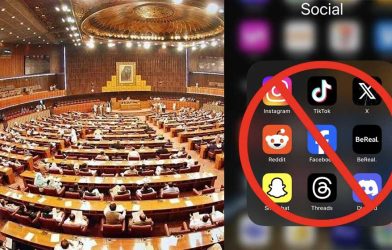
- Targeted “High-Risk” Platforms:
- YouTube
- TikTok
- Facebook & Instagram (Meta)
- Threads & X (formerly Twitter)
- Roblox
- Bigo Live
The ministry has warned that platforms failing to perform their obligations will face gradual administrative sanctions. These sanctions start with formal warnings and can escalate to heavy fines or total access termination within Indonesia.
Global Context: A 2026 Regulatory Trend
Indonesia’s decision aligns with a rapidly growing global movement to restrict youth access to social media. Several countries have recently updated their laws to include similar age thresholds:
| Country | Age Limit | Status |
| Australia | Under 16 | Implemented (Dec 2025) |
| Indonesia | Under 16 | Starting March 28, 2026 |
| Malaysia | Under 16 | Planned for July 2026 |
| Spain | Under 16 | Announced Feb 2026 |
| France | Under 15 | Proposed for Sept 2026 |
In Indonesia, where internet penetration reached nearly 80% in 2024, the impact will be significant. Surveys show that roughly 48% of children under 12 already have internet access, with many active on TikTok and Instagram. While the government acknowledges that the ban on social mediamay cause “discomfort” and confusion for families initially, they maintain that the long-term goal is to ensure a healthier digital environment for the next generation.