

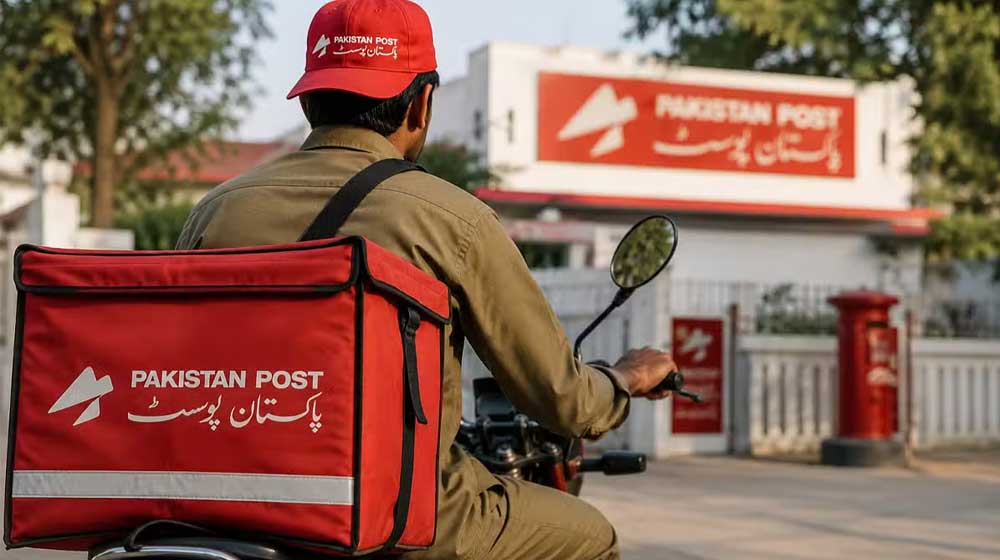
Pakistan Post has quietly cut the Pakistan Post fuel allowance for thousands of delivery workers nationwide. The new policy replaces a tiered allocation system with a single, uniform monthly ration. Therefore, postmen and delivery agents will now receive 30 litres of fuel per month regardless of location or job classification.
The previous system reflected operational realities on the ground. Postmen received 35 litres monthly. However, delivery agents in major cities got 60 litres, while those in smaller towns received 50 litres. This differentiation acknowledged that urban delivery routes required more travel than rural assignments. Still, the Director General scrapped the system in favor of across-the-board standardization.
The new policy applies uniformly to all personnel involved in mail delivery operations. Furthermore, the uniform allocation extends across all Pakistan Post circles nationwide. These include Islamabad, Rawalpindi, Lahore, Karachi, Peshawar, Multan, Hyderabad, Quetta, and Muzaffarabad. Consequently, thousands of workers will see reductions in their monthly allowances.
The impact falls heaviest on delivery agents in major cities. Those previously receiving 60 litres now get 30. This represents a 50% reduction in fuel allocation. Meanwhile, postmen face a smaller cut from 35 to 30 litres. Agents in smaller cities also lose ground, dropping from 50 to 30 litres monthly.
A separate directive from the Director General addressed pending reimbursement claims. All postmasters general received instructions to clear outstanding fuel reimbursement claims on a priority basis. However, payments will only commence once funds for the 2026-27 fiscal year become available. This caveat suggests cash flow constraints may be driving the fuel allowance cuts.
The directive implies that budget pressures forced the Pakistan Post fuel allowance revision. Maintaining the previous tiered system apparently exceeded available resources. Therefore, standardization served both administrative simplification and cost reduction. Still, the timing appears callous given no announcement addressed how workers would absorb the financial impact.
Delivery workers depend on fuel allowances to cover transportation costs. Motorcycles and bicycles consume fuel differently based on distance traveled. A major city delivery agent covering 60 kilometres daily needs more fuel than a rural postman serving a smaller area. The new uniform policy ignores these operational realities.
The policy takes effect immediately across all Pakistan Post operations. No transition period or gradual phase-in was announced. Moreover, no compensation mechanism addresses the sudden income reduction for affected workers.
Pakistan Post has faced chronic financial challenges for years. Mail volume has declined as digital communication replaced paper correspondence. Simultaneously, operational costs have risen. The organization has struggled to balance service expansion with shrinking revenues. These fuel allowance cuts represent another cost-containment measure.
Workers’ unions and employee representatives have not yet publicly responded to the announcement. However, pushback seems likely given the magnitude of reductions. Delivery agents losing half their fuel allocation cannot simply adjust their routes. Meanwhile, their actual transportation costs remain unchanged regardless of allowance levels.
The Pakistan Post fuel allowance reduction reveals institutional dysfunction. The organization cut without consulting workers or assessing operational consequences. Finally, this decision may ultimately harm postal service quality if underfunded delivery staff reduce coverage or service frequency.