

Driverless Bus for Hajj Pilgrims Begins Trial at Quba Mosque
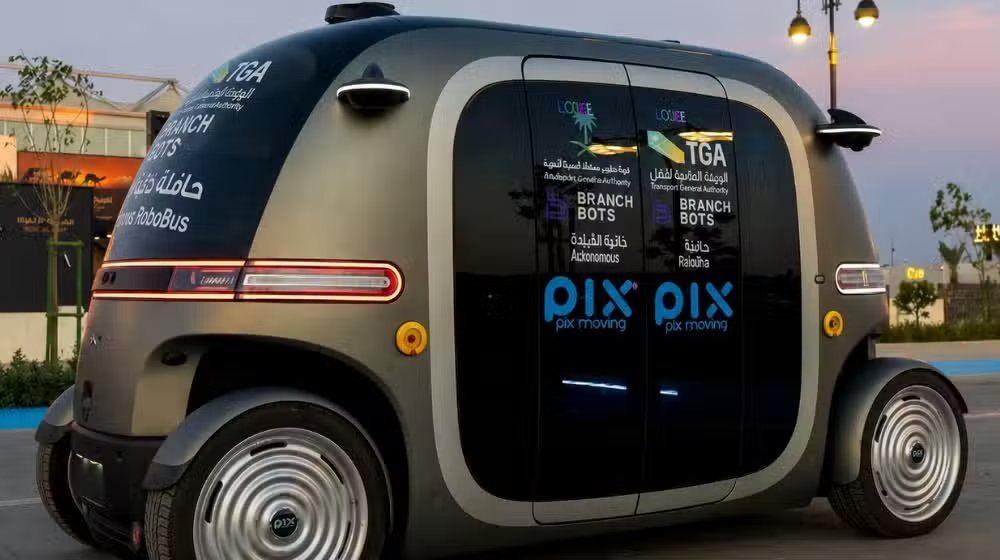
Saudi Arabia has launched a driverless bus for Hajj pilgrims as part of its broader push for smart and sustainable transport. The pilot self-driving RoboBus shuttle service is now operating inside the inner courtyard of Quba Mosque in Madinah.
The Transport General Authority rolled out this initiative. The Madinah Region Development Authority cooperated closely on the project.
The RoboBus is an electric, driverless minibus with capacity for up to 20 passengers. It runs on an advanced artificial intelligence system. Modern sensors, high-resolution cameras, and LiDAR technology support the vehicle. As a result, this driverless bus for Hajj pilgrims can navigate the mosque’s surroundings while maintaining high safety standards for both passengers and pedestrians.
Officials say the pilot project serves several important purposes. First, it tests the service’s readiness at a key religious site. Second, it measures operational efficiency and service quality. Third, it improves the overall user experience before self-driving vehicles deploy more widely in Saudi cities.
The route covers 700 meters within the inner courtyard of Quba Mosque. Consequently, visitors and worshippers can move more easily through a fully automated transport system. This driverless bus for Hajj pilgrims eliminates the need for human drivers inside the congested courtyard.
The trial will continue for 60 days. During this period, authorities will test how well the vehicle integrates with surrounding infrastructure. They will also collect field data using high-resolution digital maps.
Why does this matter for Hajj? Millions of pilgrims visit Madinah each year. Many move between mosques, hotels, and religious sites on foot. A driverless solution can reduce crowding and improve mobility for elderly or disabled pilgrims.
Saudi Arabia continues to invest heavily in smart city technologies. The RoboBus trial at Quba Mosque represents just one example. If successful, similar driverless shuttles could appear in Mecca, Jeddah, and Riyadh in the near future.
For now, the 60-day pilot will determine whether this technology is ready for wider religious tourism use. Early signs suggest that a driverless bus for Hajj pilgrims could become a common sight during future pilgrimage seasons.