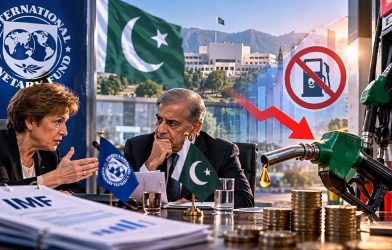


The petrol price in Pakistan has jumped again, with the federal government confirming a fresh increase starting at midnight on Friday. Officials raised petrol by Rs13.18 per litre and high-speed diesel by Rs13.80 per litre for the coming week. Therefore, both fuel types will now cost noticeably more at the pump.
According to a press release from the Petroleum Division, petrol will now sell at Rs310.71 per litre. Meanwhile, HSD will cost Rs323.30 per litre under the revised pricing. The new rates take effect immediately from midnight on Friday. Consequently, consumers should expect the higher prices at stations across the country from tonight onward.
This latest increase follows renewed tensions between the United States and Iran. Both countries exchanged strikes this week, which pushed global petroleum prices upward once again. However, this escalation comes despite an interim agreement reached last month. That agreement had aimed to end a four-month conflict that disrupted global energy supplies.
Over the past month, the government had actually reduced fuel prices by up to Rs76 per litre. This drop followed easing tensions and the signing of the Islamabad Memorandum of Understanding. Last week alone, officials cut petrol and HSD prices by Rs1.97 per litre each. Still, the biggest reduction came last month, when petrol fell by Rs74 per litre and HSD dropped by Rs67 per litre. Now, that trend has reversed sharply.
The International Energy Agency also weighed in on Friday, noting a notable supply shift. Global oil supply posted its largest monthly rise in months during June. Additionally, shipments through the Strait of Hormuz recovered, which boosted Gulf production significantly. Even so, output remained well below pre-war levels due to lingering security disruptions.
The IEA’s latest Oil Market Report placed global oil production about 9.4 million barrels per day below pre-war levels. Despite June’s sharp recovery, that gap persisted. Gulf producers raised supply by around 3.5 million bpd during the month. This came after output partially recovered under the US-Iran framework agreement. However, intermittent shipping disruptions through the Strait of Hormuz continued due to ongoing security concerns and reliance on US naval escorts. As a result, regional oil production still sat about 11.4 million bpd below pre-war levels.
OPEC+ production also climbed in June, rising by around 2.45 million bpd to reach 38.39 million bpd. Saudi Arabia contributed roughly 900,000 bpd of that increase, while Kuwait added about 630,000 bpd. Meanwhile, non-OPEC+ producers raised output by around 1.63 million bpd to 60.37 million bpd. The United Arab Emirates accounted for more than half of that increase, at approximately 940,000 bpd.
Finally, the petrol price in Pakistan now reflects just how closely local fuel costs remain tied to global oil market swings and geopolitical tensions in the Middle East.