
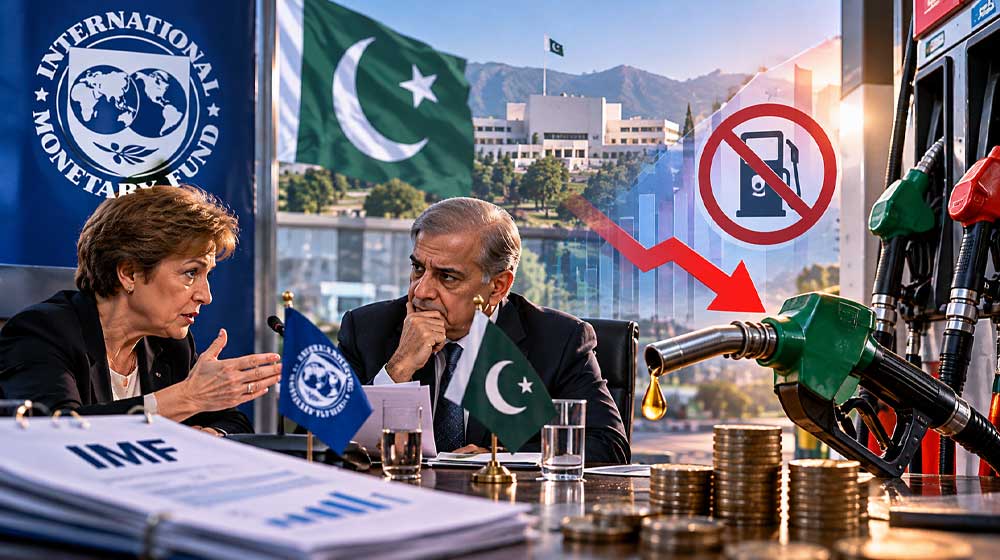
The International Monetary Fund (IMF) has urged Pakistan to limit petroleum support to deserving people and phase out costly schemes. In a statement, the fund said any help during periods of rising oil prices should be targeted and temporary. Moreover, it warned against extending broad fuel subsidies. The IMF also asked Islamabad to speed up energy sector reforms to contain economic pressures.
The fund called for cautious fiscal policy to control inflation. Pakistan’s economy grew by 4 percent between July 2025 and March 2026. However, growth is projected to slow to 3.6 percent because of the Middle East crisis. Inflation peaked in May 2026. Meanwhile, remittances from overseas Pakistanis helped keep the current account deficit under control.
In the energy sector, the IMF wants better recovery of outstanding payments and lower gas losses. It also called for measures to reduce production costs. Furthermore, it said timely adjustments in energy prices and cost cutting reforms are necessary. These steps could ease pressure on public finances over time.
The fund also said the State Bank of Pakistan should keep monetary policy sufficiently tight to control inflation. Additionally, it urged Pakistan to take steps to increase its foreign exchange reserves.
The warning follows a staff-level agreement reached on October 8, 2026. It came after the fourth review of the $7 billion Extended Fund Facility and the third review of the $1.4 billion Resilience and Sustainability Facility. Therefore, about $1.2 billion in additional financing could follow, subject to IMF Executive Board approval.
The agreement is linked to wider structural reforms. These include better governance, transparency and efficiency at state-owned enterprises. Still, the deal also covers privatization and a smaller government role in commercial activities. Finally, the call to end broad fuel subsidies shows the fund wants support aimed only at those who need it.