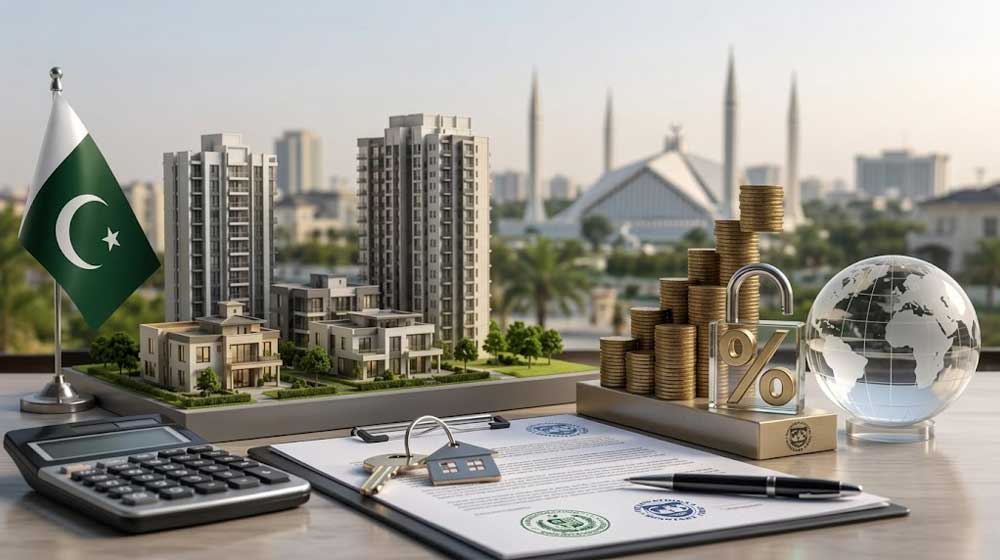
The IMF has reportedly agreed with Pakistan’s federal government to reduce withholding taxes on property transactions. This marks a significant shift in negotiations between Islamabad and the global lender.
This was not an easy win. The IMF had earlier raised concerns about revenue impact. However, both sides appear to have found common ground ahead of Budget 2026-27.
The government had been pushing hard to lower transaction costs in real estate. Officials believe the current tax burden has slowed property activity, dampened construction, and discouraged investment — both local and from overseas Pakistanis.
Under the proposed changes, withholding tax on property purchases for filers could drop from 1.5 percent to 0.25 percent under Section 236K. Meanwhile, withholding tax on property sales for filers may fall from 4.5 percent to 1.5 percent under Section 236C. These are not minor adjustments. They represent a dramatic reduction in transaction costs for compliant taxpayers.
Currently, FBR applies tiered rates based on property value. For buyers, filers pay 1.5 percent on properties worth up to Rs. 50 million. They pay 2 percent on properties between Rs. 50 million and Rs. 100 million. Properties above Rs. 100 million attract 2.5 percent. Late filers and non-filers face considerably steeper rates. Non-filers pay between 10.5 percent and 18.5 percent across those same slabs.
For sellers, Section 236C follows a similar structure. Filers currently pay between 4.5 percent and 5.5 percent depending on sale value. Non-filers, however, face a flat 11.5 percent across all three slabs.
It is also worth noting that these withholding taxes are advance income tax collections. They are not the final tax liability. Capital gains tax remains a separate obligation. It is settled at the time of filing an annual return, after adjusting any advance tax already paid under Section 236C.
Furthermore, the government expects this relief to generate a positive ripple effect. A revival in property transactions would directly support industries such as cement, steel, paint, transport, and financial services. These sectors have all felt the slowdown in construction activity.
Additionally, officials believe lower transaction costs could encourage overseas Pakistanis to invest more actively in the local market. This would also bring foreign remittances through formal channels.
Still, several key questions remain unanswered. The final Budget 2026-27 documents will clarify whether reduced rates apply only to active filers or also extend to late filers and non-filers. The final shape of this Pakistan property tax cut will become clear when the budget is formally presented.
For now, the real estate sector has reason for cautious optimism. After years of high costs and sluggish activity, the government and the IMF appear to be moving in the same direction.