
Pakistan Is Stepping Back From Sugar and Wheat Prices — Here Is What That Means for You
Wheat sugar market reforms push Pakistan toward free market pricing as government scales back decades of state intervention
Pakistan is preparing to hand price control back to the market. The government is moving to reduce its intervention in the wheat and sugar sectors as part of sweeping economic reforms. The wheat sugar market reforms aim to remove market distortions, encourage private investment, and improve efficiency across both industries. Furthermore, authorities believe scaling back state involvement will strengthen price discovery at a time when global food prices remain highly volatile.
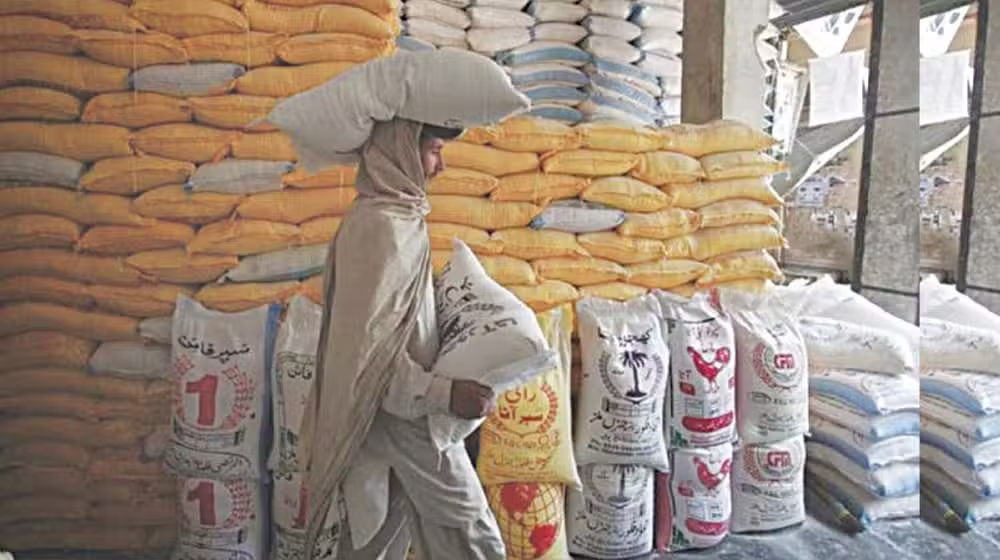
For wheat, the shift is already taking shape. Governance arrangements for strategic reserves will stay in place. However, procurement will increasingly move to the private sector at prices aligned with international markets. Government wheat releases will be restricted strictly to officially declared emergency situations. Therefore, the days of routine state interference in wheat pricing are drawing to a close.
The sugar sector is also heading toward significant change. Federal and provincial governments are working toward a new national sugar policy, targeted for completion by June 2026. The proposed policy is far-reaching. It calls for removing zoning and licensing restrictions. It also ends administered pricing for both sugarcane and refined sugar. Moreover, imports and exports will be liberalised under transparent and phased implementation rules.
Officials say the combined reforms will transition both sectors toward market-based pricing while easing fiscal pressures caused by years of state intervention. For consumers, the immediate question is straightforward — will prices rise or fall? The honest answer is that markets, left to function freely, tend to correct over time. However, the transition period carries real risk, particularly for lower-income households who spend a significant share of income on food staples.
Still, the direction is clear. Pakistan is choosing efficiency over control. Finally, whether that bet pays off will depend heavily on how carefully and transparently these reforms are implemented on the ground.