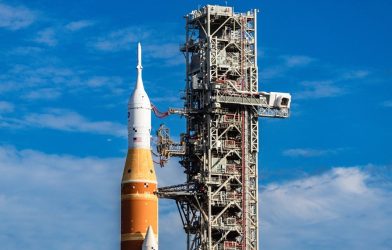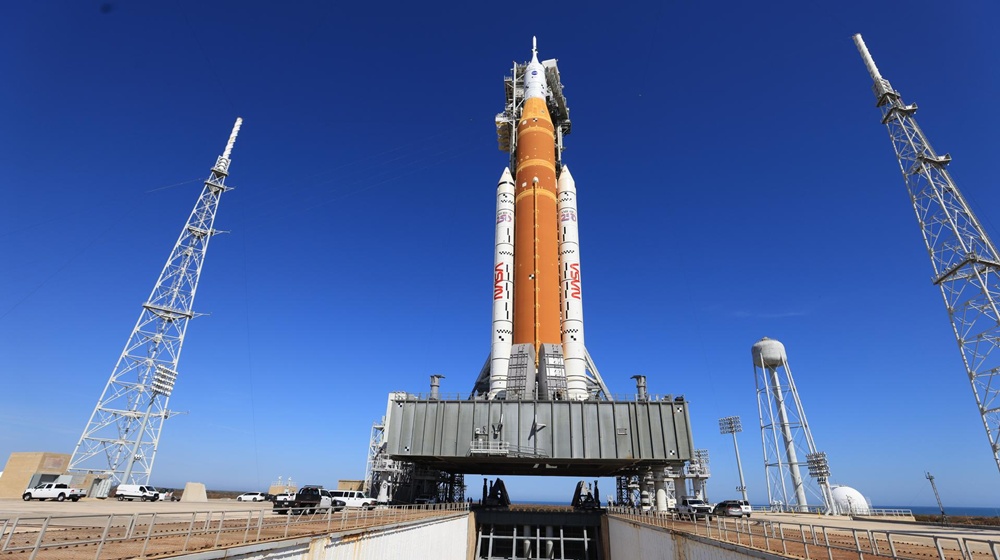
The Space Launch System (SLS) rocket and Orion spacecraft are currently positioned at Pad 39B at the Kennedy Space Center, awaiting a historic liftoff. The crew Victor Glover, Reid Wiseman, Christina Koch, and Jeremy Hansen is in final quarantine, preparing for a mission that represents a $93 billion investment in human spaceflight.
The 10-Day Flight Profile
Artemis II will utilize a “Free-Return Trajectory,” a strategic flight path where the Moon’s gravity naturally pulls the spacecraft back toward Earth.
- Launch & Earth Orbit: After liftoff, Orion will enter a high Earth orbit for 24 to 48 hours to perform comprehensive systems checks.
- Translunar Injection: A powerful engine burn will propel the crew out of Earth’s orbit toward the Moon.
- Lunar Flyby: The spacecraft will travel more than 5,000 nautical miles past the Moon—reaching a total distance of over 248,000 miles from Earth, the furthest humans have ever traveled.
- Re-entry & Splashdown: Orion will plunge back into the atmosphere at 25,000 mph, enduring temperatures of 2,000°C before splashing down in the Pacific Ocean.
Scientific and Strategic Goals
Beyond the flight itself, Artemis II is a mission of discovery and preparation. Scientists are particularly interested in the Moon’s “horizon glow” (caused by dust) and the presence of frozen water at the lunar poles, which could provide essential oxygen and drinking water for future bases.
The Moon is also a treasure trove of rare earth elements, iron, and titanium—metals vital for superconductors and medical technology. Access to these resources has intensified the modern space race, with China’s Chang’e 7 mission also eyeing the lunar south pole for a mid-2026 launch.
A Test Bed for Mars
NASA views the Moon as a safer, more cost-effective proving ground for the technologies needed to reach Mars. By refining life-support systems, air recycling, and water purification on the lunar surface, engineers can troubleshoot potential failures before committing to the multi-year journey to the Red Planet.
Furthermore, because the Moon is geologically stable compared to the “turbulent” Earth, its surface acts as a preserved archive, offering scientists a look at the earliest history of our solar system that has been lost on our own planet.