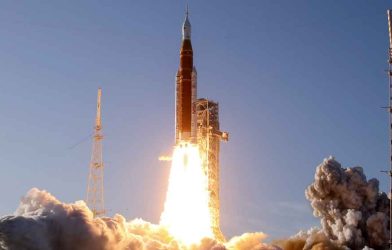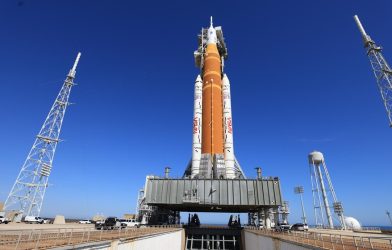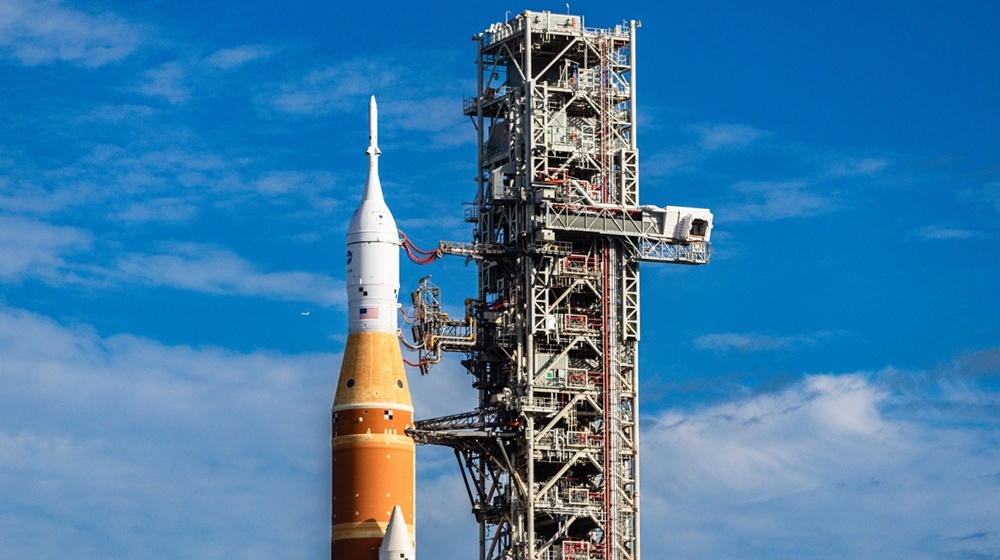
As the SLS rocket stands ready at Kennedy Space Center for its 6:24 PM EDT liftoff, the mission is being viewed through a geopolitical lens. Under the 2025 National Space Policy, Artemis II serves as a direct accelerator for the “America First” agenda, reimagining the cosmos as a domain for undisputed U.S. leadership.
The Race for Lunar Superiority
The primary competitor in this new era is China, which is advancing its Chang’e 7 mission for mid-2026 with the goal of a human landing by 2030. NASA Administrator Jared Isaacman has emphasized that the U.S. objective is to establish a permanent presence to secure the “high ground of space,” backed by a recently unveiled $20 billion plan for a lunar base.
Resource Independence: The “Lunar Gold Rush”
The Moon is no longer seen as a barren wasteland but as a repository of immense economic value. Key resources include:
- Helium-3: A rare element currently trading for over $20,000 per kg, potentially used for long-lasting nuclear fusion reactors.
- Rare Earth Minerals: Significant deposits of lithium and platinum are essential for electronics and clean energy.
- Water Ice: Located at the poles, this can be converted into rocket fuel and oxygen.
By leading in lunar mining, the U.S. aims to break the dominant hold China currently maintains over global rare earth mineral markets, a core tenet of economic “America First” strategies.
A Roadmap to Mars and National Unity
President Trump has hailed the mission as the foundation for “American astronauts to plant the Stars and Stripes on Mars.” The Moon will serve as a cost-effective test bed for life-support systems and recycling technologies that are too risky to debut on a multi-year journey to the Red Planet.
Furthermore, the mission arrives during a period of domestic political fragmentation. Much like the Apollo 11 landing in 1969, officials hope that Artemis II—featuring a more diverse crew—will serve as a unifying moment of national achievement, showcasing American strength and prosperity on the global stage.