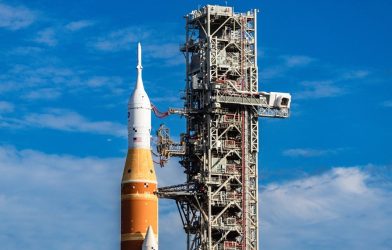

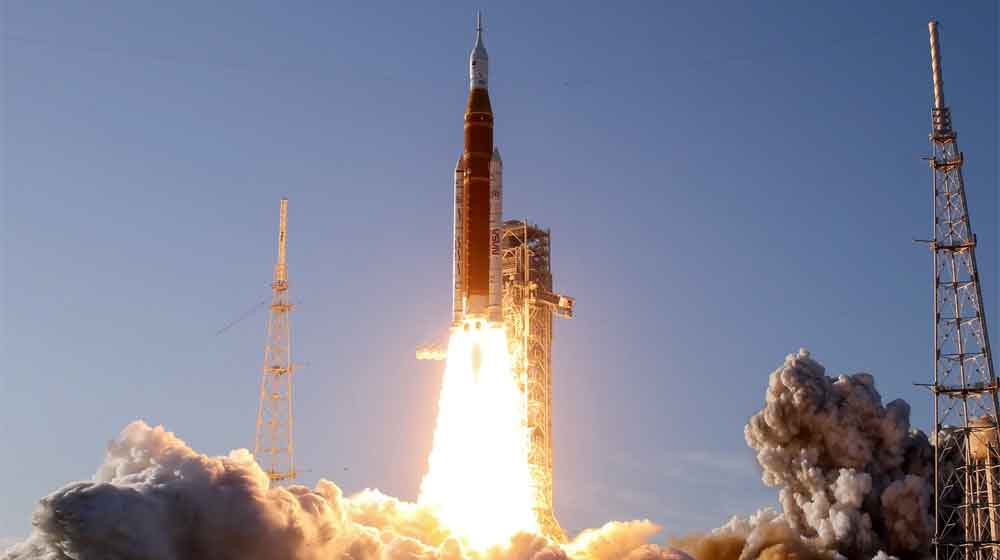
NASA achieved a historic milestone on Wednesday as four astronauts successfully blasted off on the long-awaited Artemis 2 lunar mission. The Space Launch System (SLS) rocket departed from the Kennedy Space Center at 6:35 pm local time. This mission marks the first time humans have traveled toward the Moon in over five decades. The crew includes Americans Reid Wiseman, Victor Glover, and Christina Koch, along with Canadian astronaut Jeremy Hansen. Commander Wiseman reported a “beautiful moonrise” as the spacecraft began its ascent into orbit.
The crew is currently orbiting Earth to conduct vital safety checks on the Orion capsule. This phase is critical because the spacecraft has never carried human passengers before. The team successfully completed “proximity operations” to test maneuvers required for future lunar landings. Despite the smooth launch, NASA teams are working through minor technical “kinks,” including a controller issue with the onboard toilet. However, NASA officials confirmed that the astronauts remain safe and in high spirits as they prepare for the next phase of the journey.
A Big Step for Humanity and Future Exploration
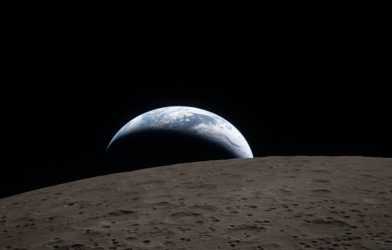
The Artemis 2 lunar mission is a 10-day voyage designed to pave the way for a permanent Moon base. On Thursday, the crew is expected to begin a three-day transit toward the Moon. They will loop around the lunar surface to capture high-resolution images and conduct naked-eye observations. This mission is also notable for its diversity, sending the first woman, the first person of color, and the first non-American beyond Earth’s orbit. If the flight proceeds as planned, these astronauts will venture farther from Earth than any human in history.
This launch provides a significant morale boost for NASA following years of budget turmoil and technical delays. The mission is seen as a key component of the broader effort to establish a lasting American presence on the Moon by 2028. Establishing a lunar platform is a strategic goal to enable further deep-space exploration, including future missions to Mars. US President Donald Trump praised the “brave astronauts” during a televised address, noting that the successful launch demonstrates American dominance in space.
The Artemis program also highlights the growing international competition in space exploration. With China aiming for a crewed lunar landing by 2030, NASA is under pressure to maintain its technological lead. By relying on private sector partnerships, the agency hopes to accelerate the timeline for a 2028 landing. Thousands of spectators gathered along Florida’s Space Coast to witness the “thunderous roar” of the SLS rocket. For many, this successful liftoff signals that the world is officially entering a new era of lunar discovery.