


Bots overtake humans internet traffic milestone arrives ahead of schedule as AI agents browse, shop, and scrape the web faster than people ever could
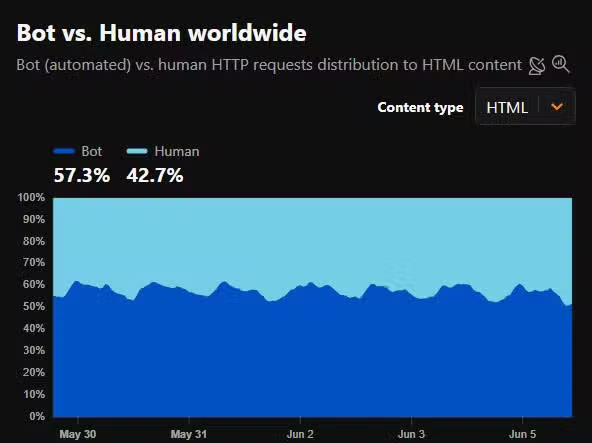
The internet has crossed a historic threshold. For the first time ever, bot traffic has surpassed human traffic online. Cloudflare data shows bots now account for approximately 57.5 percent of HTTP requests compared to 42.5 percent for humans. The bots overtake humans internet milestone arrived earlier than anyone predicted. Moreover, Cloudflare CEO Matthew Prince had forecast the crossover would happen by 2027. The data shows it has already happened.
AI Agents Drive the Shift
This wave of bot traffic is fundamentally different from traditional automated activity. Old-school bots included search crawlers, website indexers, fraud bots, and abuse systems. However, the new generation is far more sophisticated. Cloudflare tracks a growing class of agentic traffic where AI agents browse websites in ways that closely mimic human behaviour. Furthermore, these agents read product pages, compare prices, check flights, handle shopping tasks, scrape content for AI models, and manage customer service interactions. Therefore, the web is no longer primarily a place where humans click — it is increasingly a space where automated systems act on their behalf.
Welp, that happened faster than I predicted. Thought it would be end of 2027, then early 2027, but agentic traffic growing so fast that bots have now passed human traffic online for the first time in the Internet's history. https://t.co/2zX5bHdhsa
— Matthew Prince 🌥 (@eastdakota) June 3, 2026
Bots Now Lead HTTP Requests
Cloudflare data puts bots at 57.5 percent of HTTP requests. Prince acknowledged the exact timing of the crossover is difficult to pinpoint precisely. Furthermore, the figures measure HTTP requests rather than total online engagement. Humans still dominate app usage, video streaming, and social feeds. However, those activities generate fewer rapid-fire web page requests than automated agents. Therefore, the bot majority reflects a specific but highly significant dimension of internet activity.
Country Level Data
Some regions show especially high bot traffic concentrations. Gibraltar leads at 92.1 percent, followed by Singapore and Iran at approximately 76.4 percent each. Furthermore, high figures in smaller markets often reflect data center activity and hosting infrastructure. In Iran’s case, VPN use, automated scraping tools, and bypass systems may also contribute. Cloudflare has previously flagged Iran as a hotspot for malicious bot activity.
New Pressure on the Web
The rise of agentic traffic creates real challenges for publishers and online businesses. A web built for human visitors must now handle AI agents that visit far more pages than any person would during the same task. Furthermore, this affects server costs, content access rules, advertising models, and bot management decisions. Cloudflare already introduced tools to help website owners identify verified bots and signed AI agents. It also developed pay-per-crawl tools that let publishers charge AI crawlers for access instead of allowing unrestricted scraping.
A New Phase for Internet Traffic
The shift does not mean humans have abandoned the web. Instead, it signals that more internet activity now happens through automated systems. Furthermore, as AI agents multiply, websites will need new technical and business frameworks for traffic that no longer originates from human users. Finally, the internet has entered a phase where AI agents are not a future concern — they are already generating more web requests than people, and that changes everything.