

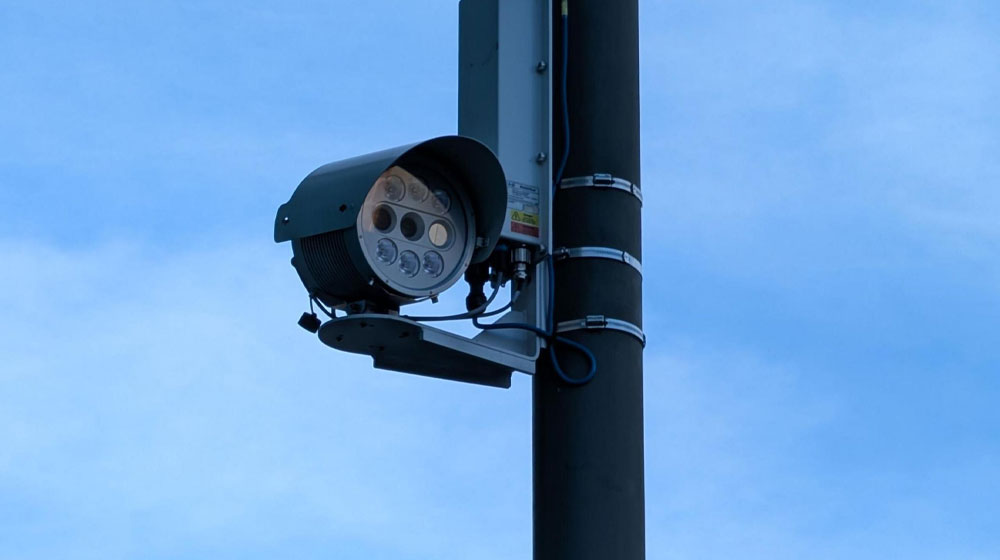
Karachi traffic police is planning a major expansion of its enforcement technology. Officials will deploy Karachi AI traffic cameras to three additional major locations, including Airport Road, Clifton, and the Do Talwar and Teen Talwar junctions. The rollout will occur by August 2026.
DIG Traffic Pir Muhammad Shah confirmed that officials are currently testing the system on Shahrah-e-Faisal. They have installed twenty high-resolution Automatic Number Plate Recognition cameras up to Drigh Road. Moreover, these cameras operate round the clock to detect lane violations continuously.
Officials selected Shahrah-e-Faisal for the pilot project because of its heavy traffic volume. Therefore, testing the system on this route provides the most realistic data. The DIG said the system is currently issuing around 100 challans daily for lane violations on the route.
“If we can fix discipline on Karachi’s busiest artery, we can fix it on any road,” he said. This statement captures the city’s broader traffic enforcement challenge. Moreover, it explains why officials chose this high-pressure location for their initial deployment.
Motorists should know what to expect on Shahrah-e-Faisal. The system offers no first-offense waiver. However, drivers can access a one-time deferment option if they wish to appeal. Additionally, the technology can differentiate between intentional violations and genuine emergencies.
Staff will mark cases involving vehicle breakdowns, potholes, or other unavoidable situations for manual review. So the system doesn’t punish drivers for circumstances beyond their control. This flexibility should ease concerns about overly strict enforcement.
Fines vary depending on the type of vehicle and the level of risk involved. Motorcycles and rickshaws face Rs. 2,500 fines. Cars incur Rs. 5,000 penalties, while buses face Rs. 7,500 fines. Meanwhile, dumpers and tankers face the highest fines at Rs. 10,000 each.
The DIG added that Karachi AI traffic cameras have already delivered results on the pilot route. Traffic flow on Shahrah-e-Faisal has improved noticeably. Furthermore, buses increasingly stay within their designated lanes rather than weaving across multiple lanes.
This technology represents a significant shift in how Karachi manages traffic violations. Traditional enforcement relied on traffic police stopping vehicles and issuing citations manually. However, automated cameras can monitor violations continuously without officer intervention.
This expansion timeline suggests officials are confident in the system’s performance. Airport Road handles heavy traffic and presents similar enforcement challenges to Shahrah-e-Faisal. Clifton and the Do Talwar and Teen Talwar junctions also experience chronic congestion and lane violations.
Implementing the system citywide could transform enforcement practices across Karachi. Yet successful implementation depends on consistent maintenance and technical support. Additionally, public compliance rates will determine whether the system achieves its traffic improvement goals.