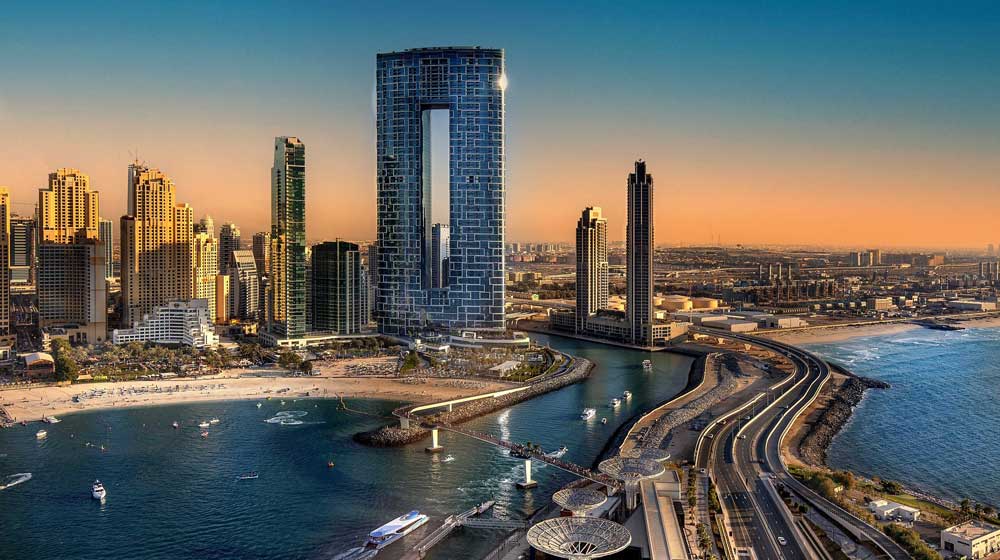
The UAE property sector is confronting its first major test in years following Iranian missile strikes that targeted airports, ports, and residential areas in Dubai and Abu Dhabi. Once viewed as an unshakable safe haven for global capital, the Dubai real estate market now grapples with shaken investor sentiment and heavy reliance on foreign buyers. This UAE Property Sector Faces Reckoning After Iran Strikes comes at a pivotal time, with off-plan sales dominating transactions and new supply flooding the market.
Iran Strikes Disrupt the Dubai Property Boom
Iranian attacks have punctured the Gulf’s reputation for stability, rattling the Dubai real estate market just as concerns about overheating were already emerging. Developers who previously sold out off-plan launches in hours now face a dramatically altered demand landscape. High-volume SEO searches for terms like “Iran strikes Dubai impact,” “Dubai real estate after Iran war,” and “UAE property sector Iran strikes” have surged, reflecting widespread investor anxiety about Dubai property prices 2026.
Off-plan deals accounted for 65% of Dubai transactions in 2025, according to brokerage data from Betterhomes. These future-delivery purchases—largely driven by international buyers—now sit in a far riskier environment where foreign appetite will decide the sector’s trajectory.
Immediate Market Reaction: Developer Shares and Bonds Plunge
Financial markets responded swiftly. On the day after the strikes, shares of major developers tumbled:
- Aldar Properties (Abu Dhabi’s largest listed developer) and Emaar Properties (creator of Downtown Dubai and the Burj Khalifa) both fell 5%.
- Bond prices for key UAE developers dropped sharply, effectively shutting new issuance as risk premiums widened.
These moves highlight how the UAE property sector depends on offshore funding. High-search-volume keywords such as “Emaar stock Iran strikes,” “Dubai real estate crash 2026,” and “Aldar Properties impact” spiked as investors monitored real-time reactions.
Developer Confidence vs. Banker Caution
Some industry leaders remain optimistic. Ziad El Chaar, CEO of Dar Global, stated:
“In this region we know things start quickly and end quickly and we overcome this because the fundamentals across the GCC nations are strong… Nothing is on hold, everything is on track.”
However, a senior real-estate banker told Reuters his firm had shelved a planned UAE property capital raise, noting:
“Investors are not thinking at this stage of investing in the region,” with risk premiums now “much higher.”
The Turbocharged Rally That Preceded the Shock
Dubai real estate prices jumped 60% between 2022 and Q1 2025, per Fitch Ratings, with residential prices still rising nearly 13% year-on-year in Q4 2025 (CBRE data). Abu Dhabi saw even stronger growth at 32%. The boom was fueled by zero income tax, liberal visas, and an influx of wealthy expatriates—Russians, billionaires, and family offices—pushing the UAE population past 11 million, with expats comprising nearly 90%.
Yet analysts had already flagged risks. JPMorgan warned that Dubai’s population growth may struggle to absorb 300,000–400,000 new units expected by 2028. Recent data shows transaction volumes in early March 2026 fell sharply (37% YoY, 49% MoM per Goldman Sachs), amplifying concerns around Dubai property prices after Iran strikes.