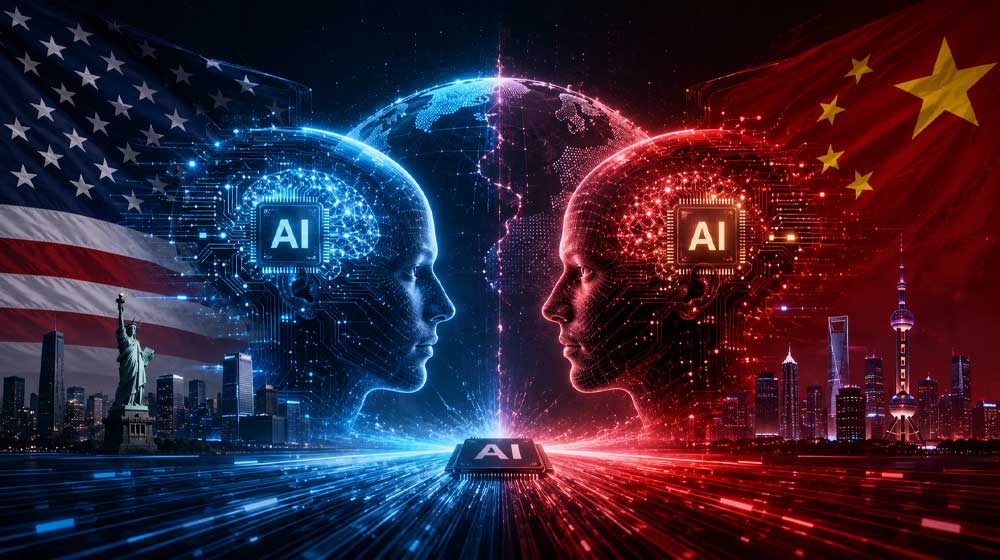
A Chinese startup just cracked open a fault line in Trump’s inner circle. Moonshot released Kimi, a free AI model that competes directly with OpenAI and Anthropic. Therefore, Chinese AI models have sparked a public feud among Trump allies over US strategy.
The dispute turned personal fast. David Sacks attacked Anthropic’s models as “lobotomized” and “woke.” Meanwhile, Pentagon official Emil Michael called OpenAI’s new strategic futures head a “supreme village idiot.” Furthermore, this clash exposes deeper disagreements about how America should respond to Chinese competition.
Chinese AI models create real economic problems. If Beijing keeps releasing powerful free systems, US companies lose pricing leverage. Moreover, this threatens valuations for OpenAI, Anthropic, and similar firms. Therefore, Trump faces both economic and political pressure simultaneously.
Sacks argues for open competition regardless of Chinese competition. He says restricting open models just because they compete with US companies makes no sense. Additionally, he notes Chinese models attract users partly because they carry fewer restrictions on interactions. However, Sacks no longer holds formal administration roles.
Inside the White House, another view is winning. Officials argue powerful AI models require government security reviews before release. Therefore, a new White House process now reviews frontier AI systems. Still, Dean Ball, a former Trump advisor now at OpenAI, calls this a “de facto licensing regime.”
The chip question looms large. US policy long focused on restricting China’s access to advanced AI chips. Export controls aimed to slow Chinese development by blocking Nvidia’s most powerful GPUs. However, Kimi’s strong performance raises uncomfortable questions about Chinese computing resources and model distillation techniques.
Model distillation represents another concern. This process trains one AI model on outputs from another. OpenAI and Anthropic previously complained that Chinese firms use this technique. The Trump administration announced anti-distillation measures in April. Still, Kimi’s release makes that policy debate suddenly more urgent.
Trump’s advisors agree Chinese AI models pose serious challenges. However, they fundamentally disagree on the response. Some want market competition. Others demand government oversight for national security. Meanwhile, Chinese labs release capable, low-cost models faster than Washington can debate policy.
Finally, Kimi has exposed a larger Washington problem.