


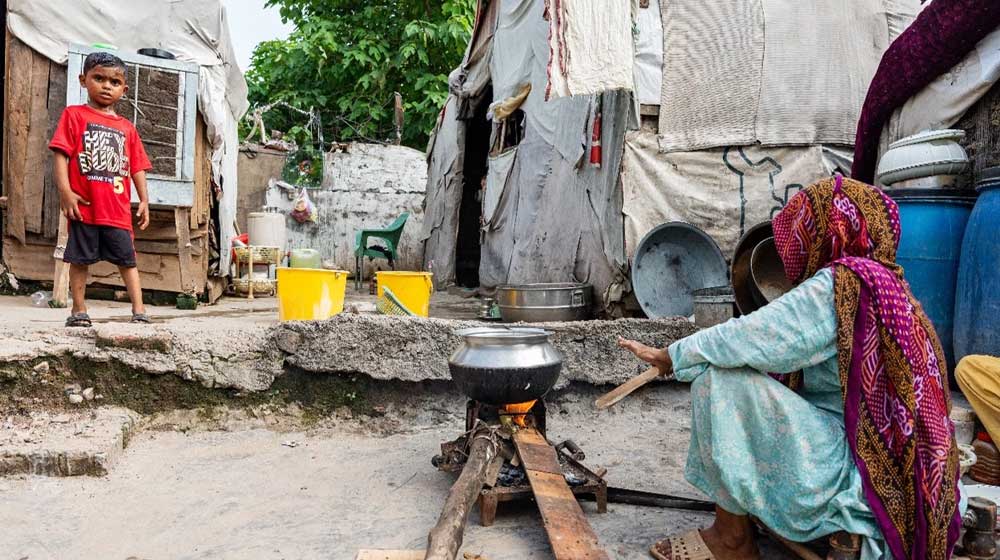
Rising fuel costs are adding fresh pressure to an economy that was already stretched thin. The World Bank says the closure of the Strait of Hormuz has pushed energy prices sharply higher across the region. Pakistan sits among the countries hit hardest, with gasoline and diesel both up by more than 40 percent.
The conflict began in February 2026 and has affected the Middle East, North Africa, Afghanistan and Pakistan. Price controls and subsidies have softened the blow for consumers. However, they have also added to fiscal strain. Pakistan now faces significant debt and financing challenges, much like Algeria, Djibouti, Iraq and Morocco.
The pressure arrives as Pakistan poverty becomes a larger share of the regional picture. Pakistan accounts for roughly 48 percent of people living below the $3-a-day line across the region. Moreover, the poverty rate rose by 6.4 percentage points at that threshold between fiscal years 2018-19 and 2024-25. The Bank blames successive shocks, including the pandemic, the 2022 floods, high inflation and currency depreciation.
The outlook offers little immediate comfort. The Bank projects GDP growth of 3.8 percent in 2027, which falls below the government’s 4 percent target. Meanwhile, inflation should climb to 8.2 percent from 7.1 percent in 2026.
Furthermore, the current account deficit could widen to 0.8 percent of GDP. The fiscal deficit should reach 3.5 percent.
Gulf economies add another risk for Pakistan. A long slowdown there could reduce demand for foreign workers. Therefore, remittance flows could weaken. Climate threats also loom, including irregular rainfall, drought and localized flooding that endanger farm output.
Still, the World Bank sees an opening in artificial intelligence. Pakistan produces about 75,000 IT graduates every year and earned $4.6 billion from ICT services exports in 2025-26. Its planned $1 billion AI program through 2030 includes shared computing infrastructure, a sovereign multilingual model, 1,000 PhD scholarships and training for one million non-IT professionals. However, weak innovation, broadband gaps, unreliable electricity and scarce local-language data could slow progress.
Only 3 percent of firms reported product innovation, compared with 23 percent among lower-middle-income peers. Instead, the Bank suggests affordable AI tools built for basic phones, low bandwidth and unstable power. Such tools could help agriculture, health and education. Finally, the report urges fixes to energy and connectivity gaps, stronger skills and private investment to ease Pakistan poverty over time.
