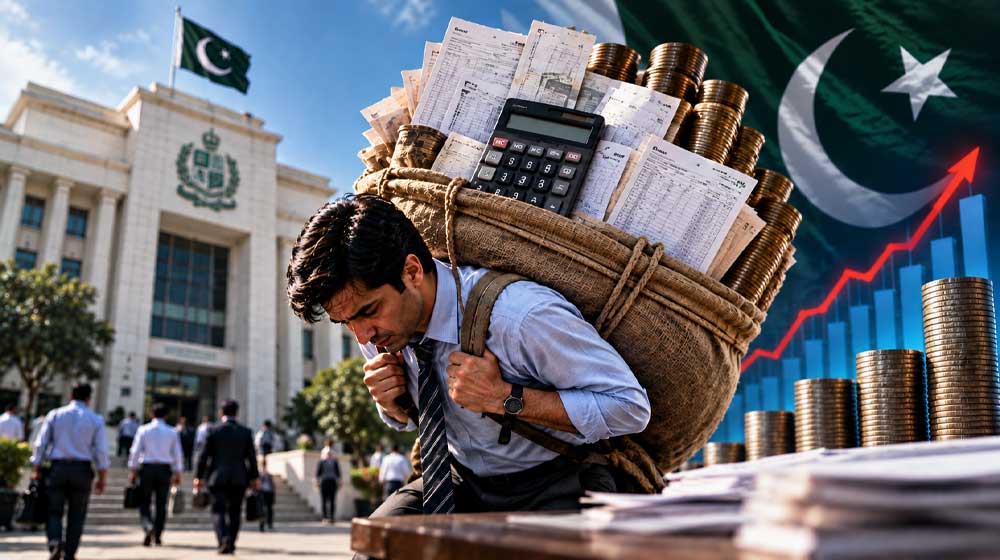
New tax figures are raising fresh questions about who pays the most in Pakistan. Provisional Federal Board of Revenue (FBR) data covers the July to September quarter. It also shows the salaried class paid Rs. 144 billion in income tax. Retailers and the real estate sector together paid only Rs. 54 billion, leaving a gap of Rs. 90 billion.
Property collections fell sharply after the government halved advance tax rates. Moreover, income tax from real estate dropped 38 percent to Rs. 35.2 billion. The International Monetary Fund (IMF) program also endorsed the cut.
Sales collections fell 42 percent to Rs. 23 billion. Meanwhile, purchase collections declined 31 percent to Rs. 12.2 billion. The purchase rate went from 2.5 percent to 1.25 percent. Furthermore, a single 2.75 percent rate replaced three slabs for sales, down from 5.5 percent.
The sector had paid Rs. 200 billion in fiscal year 2023-24. Still, that figure rose to Rs. 236 billion in 2025-26 before the cuts took effect.
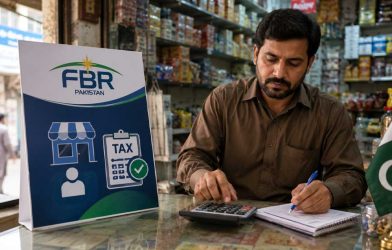
Wholesalers and retailers showed little change. Their withholding taxes totaled Rs. 18.4 billion, up just 1.3 percent. Wholesalers paid Rs. 6.2 billion, down 10 percent, while retailers paid Rs. 11.3 billion, up 8.3 percent. Therefore, the fixed tax scheme for retailers has not yet delivered visible growth.
Salaried workers, however, kept paying more. Their payments rose Rs. 13.4 billion, or 10.2 percent, from a year earlier. Furthermore, their annual contribution climbed from Rs. 391 billion before the IMF program to Rs. 629 billion by June 2026.
The latest budget offered Rs. 52 billion in relief. It cut rates by up to 3 percentage points and abolished a 9 percent surcharge. It also raised the threshold for the top 35 percent rate from Rs. 4.1 million to Rs. 7 million.
Still, household budgets remain under pressure from fuel costs. The government charges a petroleum levy of Rs. 80 per liter plus a climate support levy of Rs. 5. Additionally, these costs are pushing up prices of everyday items such as fruits and vegetables.
The figures also sit awkwardly with an earlier promise from Prime Minister Shehbaz Sharif. He had pledged to ease the burden on the salaried class after broadening the tax base. Instead, revenue from salaried individuals keeps rising while other sectors lag.