

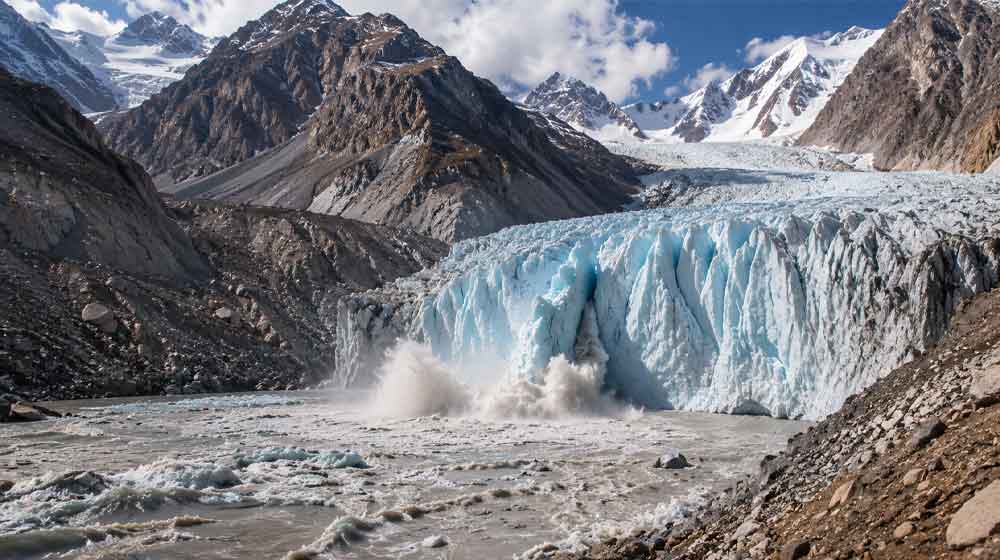
Rapid glacier melting has intensified the flood crisis across a mountainous region. Gilgit Baltistan glacier floods have prompted the National Disaster Management Authority to issue a Glacial Lake Outburst Flood alert for the Hoper and Hisper valleys in Nagar district. According to the NDMA, the ongoing heatwave has accelerated glacier and snowmelt sharply. This has increased river flows and mudslides across the region significantly.
The authority warned that multiple hazards remain major threats. Flash floods, debris flows, riverbank erosion, and damage to roads, bridges, and irrigation infrastructure continue to threaten downstream communities. Therefore, residents face immediate danger from multiple water-related hazards.
Floods and mudslides have already damaged link roads, bridges, electricity infrastructure, agricultural land, and homes in several districts. In Ghanche, rising water levels submerged a suspension bridge over the Hushe Nallah. Additionally, this disrupted access to remote communities entirely. So isolation compounds the humanitarian crisis.
Flash flooding also temporarily blocked the Karakoram Highway near the Khunjerab Pass. Consequently, tourists and cargo vehicles were stranded before traffic restoration. Meanwhile, in Ghizer district, floodwaters damaged houses, crops, and roads. Furthermore, authorities expressed concern over rising water levels in an artificial lake that could threaten nearby settlements.
The Gilgit Baltistan glacier floods reflect broader climate change impacts on mountain regions. Warming temperatures accelerate glacier retreat worldwide. When glaciers melt rapidly, water volumes overwhelm natural drainage systems. Therefore, flooding becomes inevitable during intense melt periods.
Rescue 1122 has advised residents and tourists to avoid rivers, streams, and glacier areas. Additionally, they should refrain from unnecessary travel during adverse weather. So public awareness campaigns are underway.
The NDMA has urged local authorities to remain on high alert. Officials have called on residents in vulnerable areas to take precautionary measures immediately. Rising temperatures continue increasing the risk of GLOF events. Finally, communities must prepare for potential disasters as climate impacts intensify across the region.