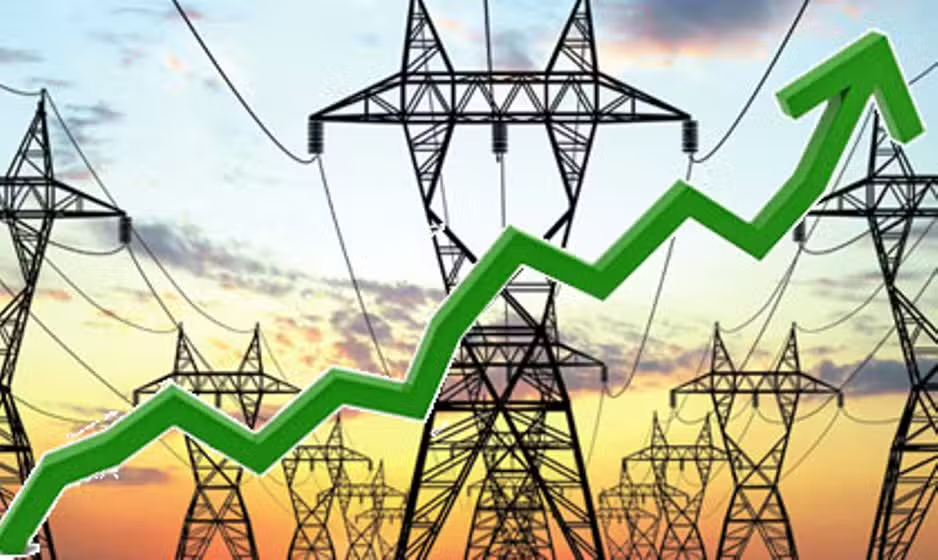
Pakistan’s power generation climbed 5.1 percent year over year in August 2026, reaching 14,943 MW. The figure comes from a new analysis by Arif Habib Limited. That output sat 1.4 percent above the seven-year seasonal average. Still, it remained below the 16,176 MW peak recorded in August 2021.
Several factors drove the demand recovery. Lower tariffs encouraged industrial consumers to shift back onto the national grid. Stronger agricultural and industrial consumption also added momentum.
Improved overall economic activity played a role as well. Large-scale manufacturing also grew 3.0 percent year over year in July 2026. Generation levels exceeded the NEPRA reference threshold during the month. This could also support future capacity utilization agreements for power producers.
Still, the expansion came with a rising power generation cost. Distribution companies are now looking to pass that cost on to consumers.
Adjusted fuel cost reached Rs. 8.83 per kWh in August. That figure sat well above the reference cost of Rs. 7.10 per kWh. Increased RLNG and furnace oil prices largely explain the gap. The higher costs pushed distribution companies to seek a positive fuel cost adjustment.
DISCOs have sought an FCA of Rs. 1.73 per kWh for the month. Meanwhile, furnace oil-based generation surged 49 percent month over month to 321 GWh. RLNG disruptions and stronger summer demand forced power producers toward costlier fuel sources.
NPL, NCPL and NEL should see significant utilization as a result. That trend should also support earnings for firms operating under the hybrid take-and-pay regime. LNG-based power generation, however, declined sharply. It fell 51.7 percent year over year to 1,052 GWh in August.
Geopolitical disruptions sharply reduced LNG imports during the month. Pakistan had originally scheduled seven long-term cargoes for August. PSO imported only one of them under its long-term contract, just 13.37 percent of planned volume.
Additionally, higher international oil prices increased the cost of the imported cargo. This pushed RLNG fuel cost to Rs. 45.93 per kWh, the second-highest level on record. This elevated RLNG cost further contributed to the fuel cost adjustment DISCOs are now seeking.
Therefore, the coming months could bring a fresh test for Pakistan’s energy pricing framework. Regulators must weigh higher generation against the power generation cost consumers may soon face.