
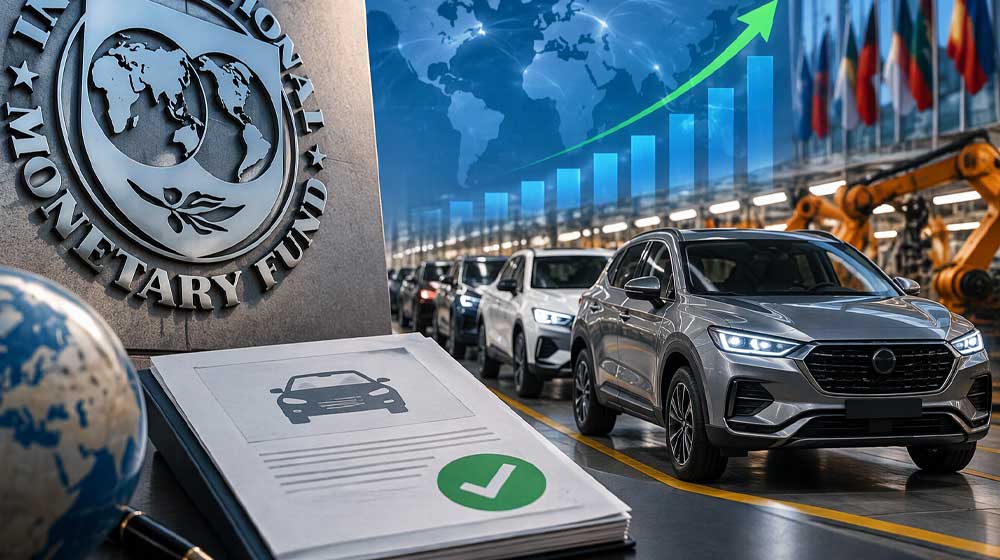
Pakistan has received clearance from the International Monetary Fund (IMF) for its new auto policy, ProPakistani reported on November 12, 2026. Prime Minister Shehbaz Sharif has approved the Autos and Auto Parts Manufacturing Policy 2026-31. The IMF raised no objections to the draft, according to the report.
The policy replaces the old five-year plan, which expired in June 2026. The government presented it to the public on November 7 at a press conference in Islamabad. Information Minister Attaullah Tarar and Haroon Akhtar Khan, the Prime Minister’s Adviser on Industries and Production, led that briefing.
Local parts targets by 2030-31
The policy forces carmakers to use more Pakistani-made parts. By 2030-31, local content must reach at least:
- 40 percent for petrol and diesel cars and SUVs
- 45 percent for light commercial vehicles
- 80 percent for tractors
- 90 percent for motorcycles and rickshaws
Carmakers must also keep the local content they already have in each model. Customs duty cuts will come over five years, but only alongside these local-production and export commitments.
A $6 billion export bill
The policy sets a combined auto export target of about $6.01 billion for 2026-31. Auto parts makers must deliver $3.29 billion of that, which is 55 percent. Vehicle assemblers must deliver the remaining $2.72 billion, according to the Asian Mirror and ProPakistani. The policy projects $17.7 billion in foreign exchange savings.
Pakistan has around 2,200 auto parts makers. The policy aims to attract at least five large “anchor” companies to invest during the five years.
Why car buyers should wait
The government says the aim is cheaper cars over time. But there is a catch. Under its IMF programme, Pakistan must make up for any lost tax. The Economy, a Pakistani news site, reported that incentives for electric vehicles and exports will be paid for by higher tax on petrol and diesel cars above 1,000 cc.
On November 7, the government proposed a 1 percent sales tax on fully electric vehicles. It also proposed 6 percent on range-extended models and 9 percent on plug-in hybrids. It also said the State Bank’s car loan limit for electric vehicles would rise to Rs. 10 million, with repayment stretched from three to five years, according to Automark.pk. In October, the IMF had reportedly asked for 18 percent sales tax on some electric cars, according to Shafaqna Pakistan. The reports I found do not say whether the new IMF clearance covers these exact rates.
Approvals still pending
Reports differ on timing. One adviser said the policy took effect immediately, but other outlets list further steps. These include the Economic Coordination Committee (a top government panel on economic matters), the federal cabinet, Parliament and a Finance Bill, and a formal notification. Until those are done, buyers should not expect new prices at showrooms.