
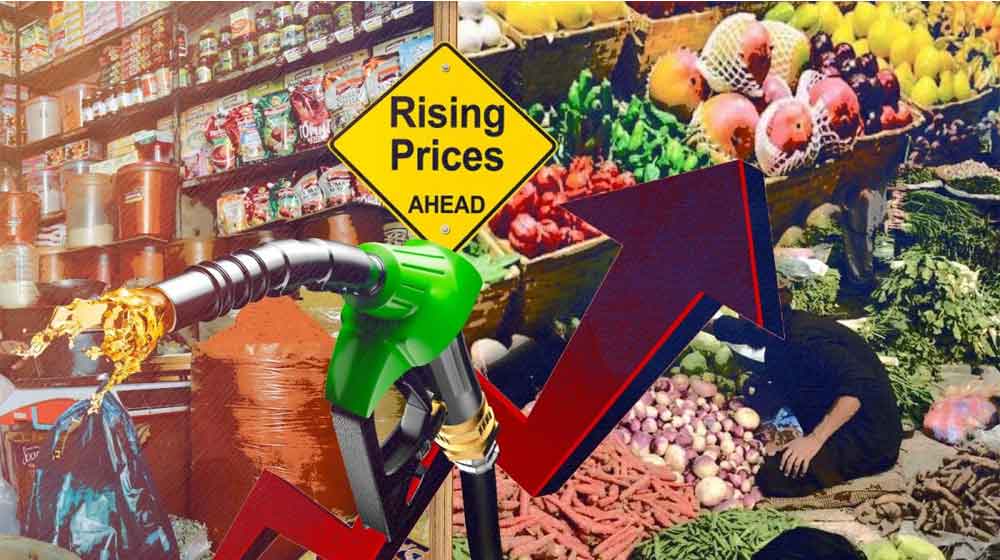
Pakistan is facing rising inflation due to the ongoing fuel price surge Pakistan is experiencing. Higher energy costs and a low base effect from last year have pushed inflation expectations upward. This trend shows how strongly fuel prices influence the country’s economic stability.
Analysts expect headline inflation to reach between 7.6% and 8.0% year-on-year in March. This is a sharp increase from 0.7% in the same month last year. The jump appears large, mainly due to the low base effect. However, inflation pressure is still visible across multiple sectors. This confirms that the fuel price surge Pakistan is affecting the broader economy.
On a monthly basis, inflation may rise between 1.5% and 1.9%. Housing and transport costs are the main drivers. Electricity charges have pushed the housing index up by around 1.8%. Transport costs have surged significantly due to rising fuel prices. Petrol now stands at PKR 321 per liter, while diesel has reached PKR 335. These are among the highest levels in recent years.
Core inflation shows a slight decline but remains above 8%. Food prices offer limited relief. Prices of tomatoes and wheat have decreased slightly. However, fruits and chicken have become more expensive. This balance keeps food inflation relatively stable.
Looking ahead, fuel prices remain the biggest risk. Government subsidies, estimated at PKR 115 per liter, are putting pressure on resources. If global oil prices rise further, local fuel prices may increase again. This could push inflation beyond the central bank’s target range.
Pakistan’s inflation outlook now depends heavily on fuel price trends. Without stability in energy costs, controlling inflation will remain difficult.