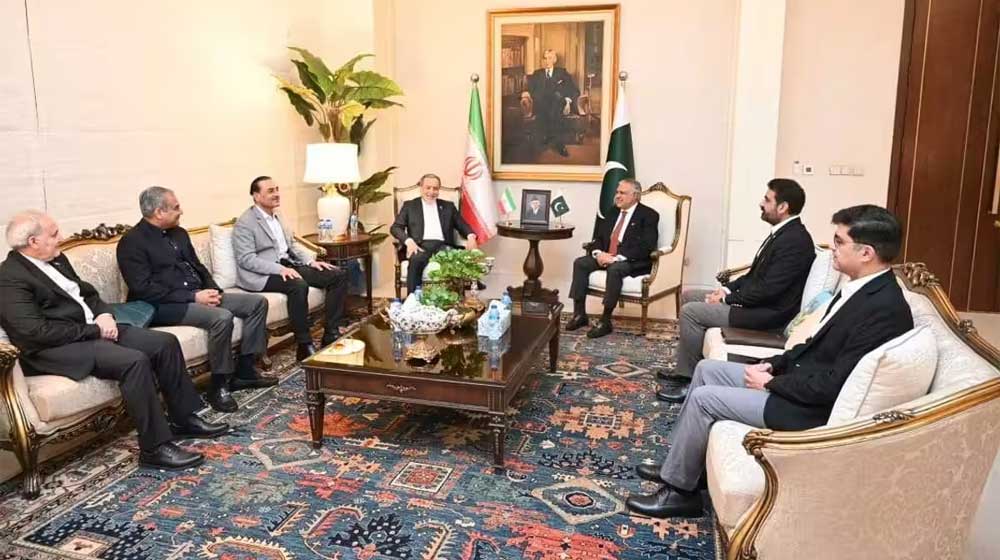
Iranian Foreign Minister Abbas Araghchi arrived in Islamabad on late Friday. Senior Pakistani officials received him at the airport. On Saturday, Araghchi arrives in Islamabad and meets Deputy PM Ishaq Dar and COAS Field Marshal Asim Munir. Pakistan continues stepping up efforts to facilitate the second round of talks between Tehran and Washington. The Foreign Office confirmed that Araghchi will hold further meetings focused on regional developments and promoting stability.
We arrive in Islamabad, Pakistan, for an official visit. FM Araghchi will be meeting with Pakistani high-level officials in concert with their ongoing mediation & good offices for ending American imposed war of aggression and the restitution of peace in our region.
— Esmaeil Baqaei (@IRIMFA_SPOX) April 24, 2026
No meeting… pic.twitter.com/1vP51xIoep
Iranian Foreign Ministry spokesperson Esmaeil Baqaei posted on X about the visit. He described the meetings as official consultations with Pakistan on “ongoing mediation & good offices” aimed at ending the “American-imposed war of aggression.” Baqaei clarified that no Iran-US meeting will take place in Islamabad. Instead, Araghchi arrives in Islamabad to convey Iran’s positions to Pakistani mediators. Officials said security cooperation and diplomatic pathways will dominate the discussions.
Pakistan positions itself as a key facilitator between the two adversaries. Islamabad encourages indirect engagement as regional tensions persist. Araghchi will meet members of a domestic mediation team and present Iran’s position on possible frameworks for talks. Security in the capital tightened ahead of the visit, particularly around key government and diplomatic zones. When Araghchi arrives in Islamabad, the city operates under heightened security measures.
The meetings come amid renewed diplomatic activity between Iran and the United States. Exploratory contacts have aimed at restarting stalled negotiations. Pakistan has historically maintained relations with both Tehran and Washington. The country repeatedly calls for resolving disputes through diplomatic engagement rather than confrontation.