
Chinese solid-state battery EV breakthrough delivers 1,500km range and three-minute charging in a development that could reshape electric mobility
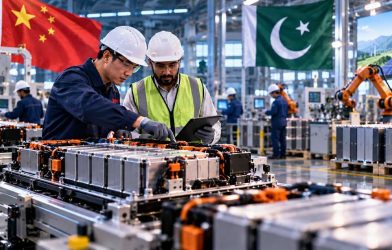
Electric vehicles may be about to take a giant leap forward. Researchers at the Chinese Academy of Sciences have developed a solid-state lithium-metal battery capable of delivering between 1,000 and 1,500 kilometres of range on a single charge. The Chinese solid-state battery EV breakthrough achieves an energy density of 451.5 Wh/kg. Moreover, it supports ultra-fast charging and discharging in roughly three minutes. The findings appear in the Journal of the American Chemical Society.
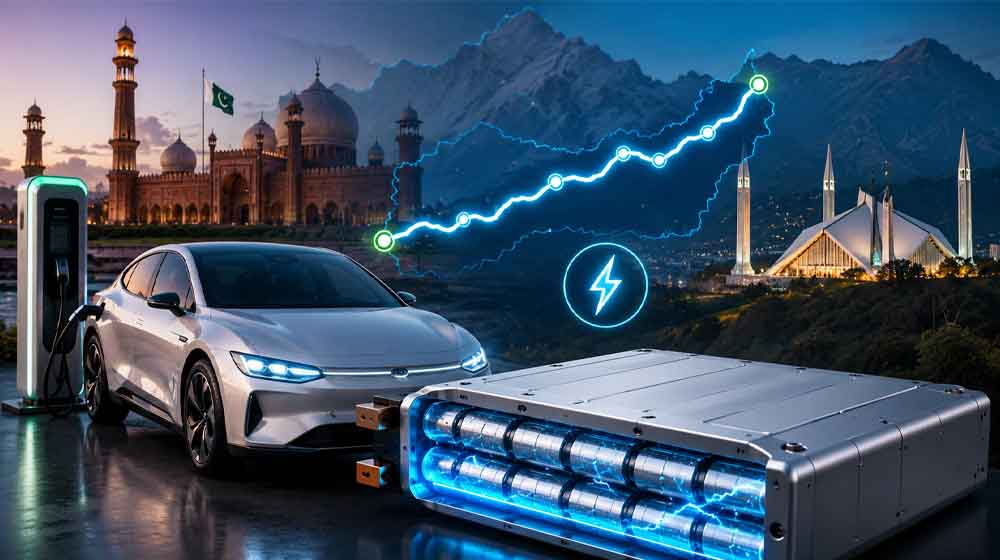
To put that range in perspective, the Lahore-Islamabad Motorway stretches approximately 370 kilometres. This battery could cover that distance four times on a single charge. Therefore, the technology would effectively eliminate range anxiety for the vast majority of drivers — not just in Pakistan but globally.
The technical achievement behind the battery is equally impressive. Researchers used a new “compatibilizing-solvent plasticization” method in PVDF-based polymer electrolytes. This approach improves material compatibility during fabrication and then locks the electrolyte structure in place after solvent evaporation. Furthermore, the prototype maintains stable performance under a 20C charge rate. It also achieves 700 charge cycles with approximately 81.9 percent capacity retention. Therefore, the battery holds up not just in performance but also in longevity.
Safety testing adds further credibility. Researchers built an ampere-hour-scale pouch cell using a thin lithium-metal anode. It passed nail penetration resistance testing while maintaining structural integrity. Additionally, the energy density of 451.5 Wh/kg significantly exceeds mainstream lithium iron phosphate batteries, which typically operate around 200 Wh/kg.
Major Chinese battery companies are already moving toward commercialisation. Ganfeng Lithium, CATL, Sunwoda, and Farasis Energy have all reported progress toward pilot production or engineering validation targets for 2026 and 2027. Still, LFP batteries continue to dominate China’s EV market today. CATL leads that segment, followed by BYD and others. Finally, solid-state technology may be the future — but the present still belongs to lithium iron phosphate.