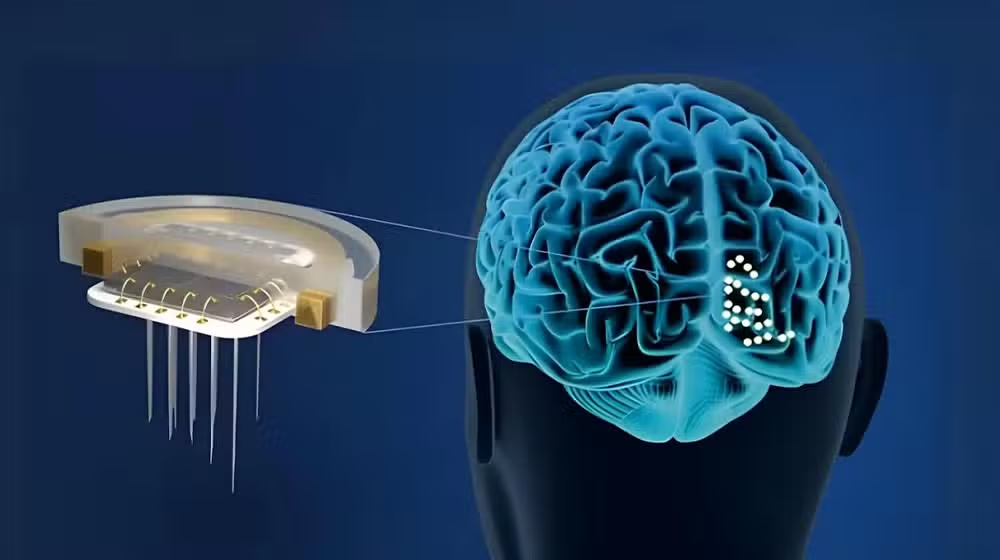
In a landmark move for medical technology, China has become the first country in the world to grant commercial approval for a brain-computer interface (BCI) designed to treat paralysis. The device, known as NEO and developed by Neuracle Medical Technology, has been authorized by China’s National Medical Products Administration (NMPA) following eighteen months of rigorous clinical testing. This approval marks a pivotal shift for BCI technology, moving it from the realm of experimental laboratory research into the open commercial market.
The NEO implant is specifically designed for patients aged 19 to 60 who suffer from paralysis due to spinal cord or neck injuries. Unlike many experimental models currently in development globally, NEO has undergone safety validation through a trial involving 32 patients, none of whom reported adverse side effects. The device functions by placing a set of electrodes directly onto the brain’s motor cortex. When a patient imagines a physical movement, the implant captures those neural signals and transmits them to an external system, which then translates the thoughts into mechanical actions performed by assistive hardware, such as robotic gloves.
In practical applications, the technology has already demonstrated the ability to restore basic autonomy to trial participants, allowing them to grasp objects and handle utensils through thought alone. While international competitors, including Elon Musk’s Neuralink, continue to navigate the clinical trial stages in the West, China’s regulatory green light positions the country at the forefront of the sector. This commercial milestone is supported by a robust national “roadmap” consisting of 17 strategic steps aimed at establishing China as the undisputed global leader in BCI research and development within the next five years.
The commercialization of NEO is expected to trigger a surge in domestic and international interest in neural engineering. As China begins the rollout of this technology, the global medical community is closely watching how the device performs in a real-world commercial environment. For the millions living with paralysis, this development offers a tangible glimpse into a future where digital interfaces can bridge the gap between the human mind and physical mobility.