
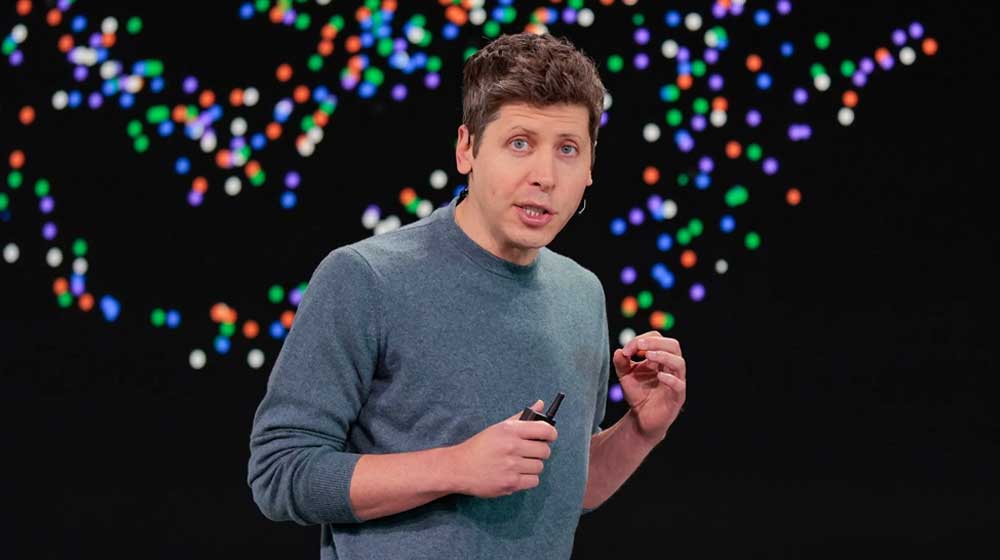
OpenAI chief executive Sam Altman has said that the memory sitting inside ordinary personal computers is a poor use of a limited global supply, and that it would do more work inside data centres.
Speaking on the Cheeky Pint podcast with host John Collison, Sam Altman said that from a global allocation point of view it is “quite terrible” for everyone to hold part of the world’s limited DRAM supply in their own machine and use it only about 5 percent of the time. He argued that in a supply-constrained market, the aim should be maximum use of that memory in the cloud, and said most people’s instinct runs the other way.
DRAM is the working memory in a computer — the RAM listed on a laptop’s spec sheet as 8GB or 16GB. It holds whatever the machine is doing right now.
The remark drew a wave of criticism online. The common objection was straightforward: people buy computers to edit video, play games, open large files and run software without paying a monthly subscription, and a machine that is idle most of the day is a normal machine, not a wasted one.
The shortage behind the remark
The timing is what made the comment land badly. The world is in the middle of the worst memory squeeze in years, and AI data centres are the main reason for it.
Memory research firm TrendForce has tracked steep quarter-on-quarter rises in DRAM contract prices through 2026, and in late September forecast another 10 to 15 percent increase for the fourth quarter. Gartner estimated in February that combined DRAM and SSD prices would rise about 130 percent by the end of 2026, lifting PC prices by roughly 17 percent and smartphone prices by about 13 percent compared with 2025. IDC has put the average rise in PC selling prices this year at up to 8 percent.
The effect is visible on shelves. A 32GB DDR5 desktop memory kit that sold for well under $100 in 2025 has been trading in the US at roughly $429 to $450 this month. HP has said memory now makes up around 35 percent of the material cost of a laptop, up from 15 to 18 percent a quarter earlier.
So the criticism of Sam Altman is not really about his economics. It is about who is on which side of the shortage: the firms buying memory in bulk for AI data centres are the same ones telling consumers that their own memory is poorly used.
What this costs in Pakistan
Pakistan imports essentially all of its computers, so every one of these increases lands here with a currency conversion and duties on top.
At the State Bank of Pakistan’s weighted average rate of about Rs. 276.76 to the dollar on October 29, 2026, a $100 rise in a laptop’s price is roughly Rs. 27,700 before any import duty, sales tax or retailer margin. A 17 percent rise on a Rs. 200,000 laptop is about Rs. 34,000.
That matters more here than it might elsewhere. Pakistan has close to three million freelancers and a record $4.6 billion in IT exports last fiscal year, and that work runs on personal machines bought with personal money. A student or a new freelancer buying a first laptop is paying the AI buildout’s bill without any of its benefits.
Practical advice is thin, because nobody expects relief soon. SK Hynix has warned the shortage could run for years. If you need a machine, buying sooner rather than later is the safer bet, and buying one with the RAM you need already fitted is better than planning to upgrade it in a year.