

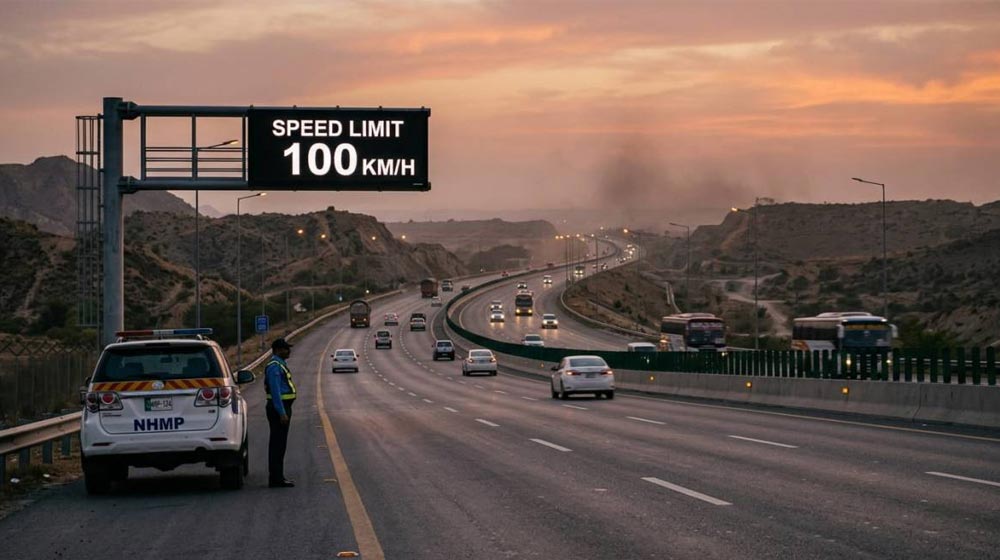
The reduced speed limits in Pakistan have officially come into effect as part of the government’s fuel conservation strategy. The National Highways and Motorway Police implemented the new rules on March 26, 2026, following directives aimed at improving energy efficiency and reducing fuel consumption across the country.
Authorities have urged motorists to follow the revised limits strictly. The government wants to cut fuel usage and improve road safety through these changes. Officials also launched an awareness campaign to ensure drivers understand and comply with the new regulations.
Reduced Speed Limits in Pakistan Aim to Save Fuel and Improve Safety
The reduced speed limits in Pakistan apply to both motorways and national highways. On motorways, cars and light transport vehicles now have a limit of 100 km/h, down from 120 km/h. Passenger and heavy transport vehicles must now follow a reduced limit of 90 km/h instead of 110 km/h.
On national highways, the limits have also been lowered. Cars and light vehicles must now drive at 80 km/h instead of 100 km/h. Buses and trucks must follow a new limit of 65 km/h, reduced from 80 km/h. These changes aim to create a more controlled and efficient driving environment.
Experts support this move due to its impact on fuel efficiency. Vehicles consume more fuel at higher speeds because air resistance increases rapidly. Lower speeds reduce engine strain and help drivers save fuel over long distances. According to the International Energy Agency, reducing speed by just 10 km/h can lower fuel consumption by up to 6 percent.
Global factors have also influenced this decision. Rising oil prices and supply disruptions have forced many countries to adopt similar measures. Pakistan has taken this step to manage fuel demand and reduce economic pressure caused by expensive imports.
The policy also improves road safety. Lower speeds reduce the chances of severe accidents and give drivers more control over their vehicles. This makes highways safer for both private and commercial transport.
Overall, the new limits reflect a practical approach to current energy challenges. If drivers follow these rules consistently, the country can achieve meaningful fuel savings while improving road safety.