

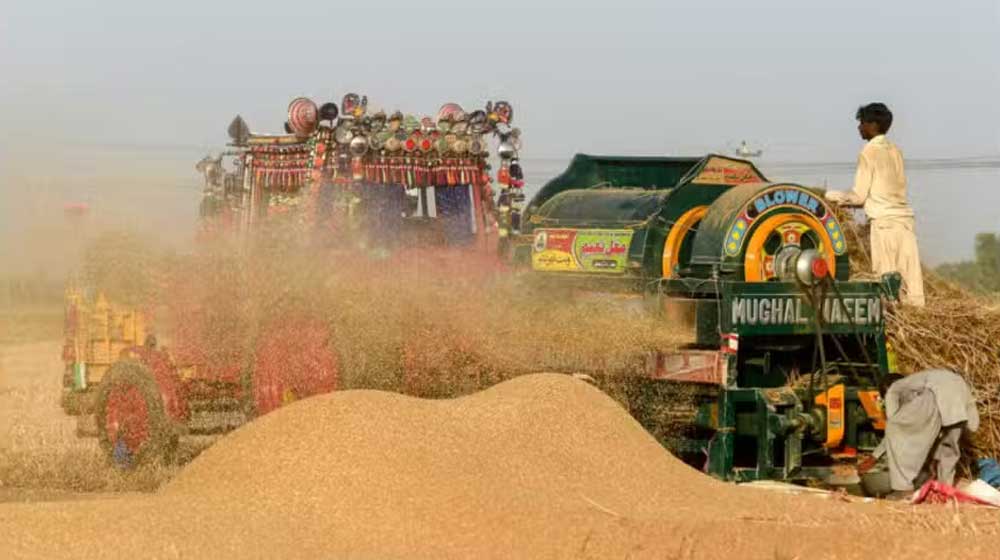
Pakistan finally acknowledged the obvious. The federal government made a wheat import decision to bring in 1 million tonnes. Therefore, the nation will import massive quantities to stabilize grain and flour prices spiraling upward across the country.
Federal Minister Rana Tanveer Hussain confirmed the wheat import decision Thursday. He said provincial governments demanded action. Moreover, rising prices left officials with no choice but to import. Additionally, the government hopes this move stabilizes markets nationwide.
Wheat prices tell the crisis story clearly. Early July 2026 data shows average wheat at Rs. 4,611 per 40kg. This represents Rs. 115 per kilogram—a steady climb. Furthermore, prices vary by province. Punjab recorded Rs. 4,423, while Khyber Pakhtunkhwar hit Rs. 5,100. Therefore, consumers face regional pricing chaos.
Flour prices follow similarly upward trends. National average reached Rs. 1,288 per 10kg. Meanwhile, Punjab’s price sits lowest at Rs. 1,224. However, Balochistan faces the highest at Rs. 1,378 per 10kg. Therefore, families struggle with basic staples.
The shortfall was flagged months ago. As early as April 29, officials projected a 1.2 million tonne deficit for 2026-27. However, estimates diverged sharply afterward. The Progressive Flour Millers Group calculated a 2.5 million tonne shortfall. Meanwhile, separate official assessments confirmed similar numbers.
Punjab’s production reached approximately 19.5 million tonnes, according to PFMG President Majid Abdullah. With 30 percent marketable surplus, that yields 5.85 million tonnes. However, the market requires 4.3 million tonnes immediately. This includes 1.5 million for mills, 0.5 for aggregators, and other allocations. Therefore, only 1.55 million tonnes remain available. Still, the next eight months require 4 million tonnes. Consequently, Punjab alone faces a 2.5 million tonne gap.
Official assessments paint an equally dire picture. Pakistan’s population stands at 268.13 million. Therefore, total wheat demand reaches 34.33 million tonnes annually. This comprises 30.83 for human consumption, 1.5 for feed and seed, and 2.0 for reserves.
Total availability estimates only 31.78 million tonnes. Domestic production contributes 29.6 million, while carryover stock adds 2.0 million. Consequently, the deficit reaches approximately 2.55 million tonnes. The wheat import decision addresses only portion of this shortage.
Stakeholders urge sustained policy intervention now. Without continued action, prices will escalate further. Finally, the wheat import decision represents first step toward stabilizing Pakistan’s grain crisis.