

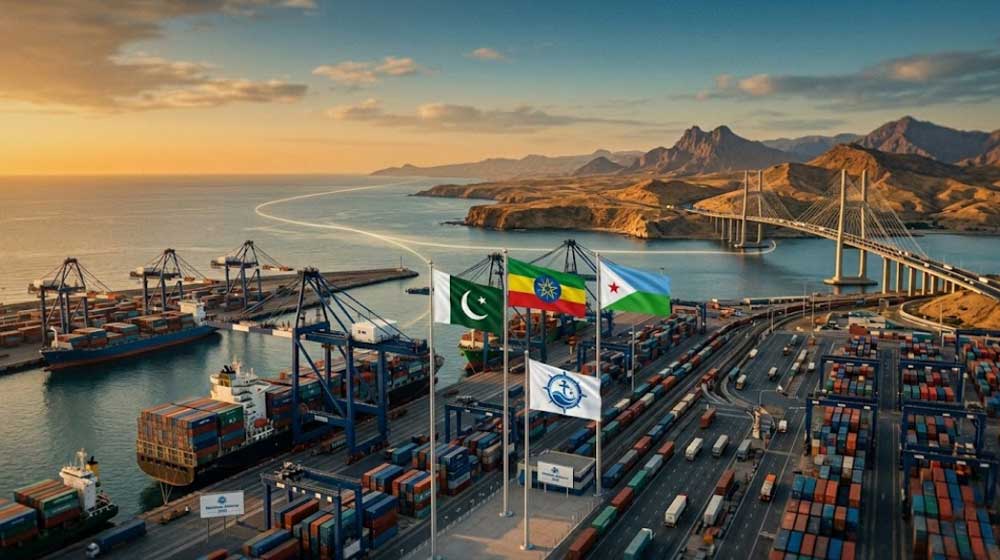
A new era of South-South cooperation is on the horizon. Pakistan and Ethiopia have officially agreed to explore a groundbreaking Pakistan Ethiopia maritime alliance, potentially bringing Djibouti into a trilateral framework. This strategic move aims to bridge the trade gap between Asia and Africa, creating a seamless corridor for economic growth.
The proposal emerged during the first official meeting between Federal Minister for Maritime Affairs, Muhammad Junaid Anwar Chaudhry, and the Ethiopian Ambassador, Dr. Oumer Hussein.
A Strategic Framework for Connectivity
The heart of the Pakistan Ethiopia maritime alliance lies in geography. While Ethiopia is a landlocked nation, its proximity to the Red Sea makes it a vital player in East African trade.
Minister Chaudhry highlighted that Ethiopia could significantly boost its trade capacity by utilizing the Port of Djibouti under a structured, three-country arrangement. This framework is designed to:
- Streamline Logistics: Create faster, more efficient shipping routes between Pakistani ports and East Africa.
- Leverage Geography: Utilize Djibouti’s world-class port facilities as a gateway for Ethiopian goods.
- Expand Markets: Provide Pakistani exporters direct access to the rapidly growing Ethiopian economy.
Ambassador Hussein welcomed the proposal, noting that it aligns perfectly with Pakistan’s “Look Africa” and “Engage Africa” initiatives. These policies are designed to pivot Pakistan’s economic focus toward the African continent, which remains a land of untapped potential.
However, moving from a proposal to a reality requires precision. Both nations have assigned officials to begin technical consultations. These experts will:
- Develop a practical operational model for the alliance.
- Examine the legal and maritime frameworks required for trilateral cooperation.
- Identify specific trade sectors—such as textiles, pharmaceuticals, and agriculture—that will benefit most.
“This framework is not just a bilateral deal; it is a scalable model that could later expand to include more regional partners,” stated Minister Chaudhry.
Why Djibouti?
Djibouti serves as the linchpin of this potential deal. Its strategic location at the mouth of the Red Sea makes it the primary transit point for Ethiopian trade. By formalizing a Pakistan Ethiopia maritime alliance that includes Djibouti, Pakistan secures a stable foothold in a region that handles a massive percentage of global maritime traffic.
As technical teams begin their work, the potential for a “Blue Economy” partnership between these nations looks promising. If successful, this maritime alliance will do more than just move cargo; it will strengthen diplomatic ties and create a new economic bridge between the Indian Ocean and the Horn of Africa.
Stay tuned as we track the progress of this historic regional connectivity framework.