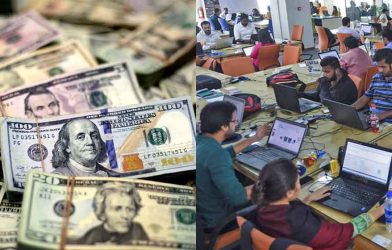


The Pakistan Digital Authority (PDA) has told the National Assembly Standing Committee on IT and Telecom that Pakistan’s digital transformation could unlock $60 billion to $80 billion in economic gains over the next five years, ProPakistani reported on Monday, October 12, 2026.
The figures are the PDA’s projections, not results the economy has already delivered. The briefing also says Pakistan has built more than 100 digital platforms, but fragmented systems, administrative inefficiencies and weak coordination have kept them from delivering their full value.
What the PDA proposed
The authority has put forward a national digital transformation framework with four main parts:
- A National Digital Masterplan
- Digital public infrastructure
- National digital standards
- Support for implementation across government departments
It also calls for federal and provincial governments to connect existing systems instead of funding duplicate ones. The briefing mentions a Pakistan Digital Stack, secure data-sharing systems and common standards for public institutions, along with better data governance and wider use of artificial intelligence.
Where the gains are expected
The briefing names four sectors, with estimates running to 2030:
| Sector | Estimated gain by 2030 | Type of gain |
|---|---|---|
| Agriculture | More than $9 billion | Economic gain |
| Healthcare | $450 million | Savings |
| Real estate | $15 billion | Additional investment |
| SMEs, commerce and retail | $6 billion | Additional revenue |
These are different kinds of numbers, so they cannot be treated as one clean addition to GDP. Added together, the four sector figures come to a little over $30 billion. That is roughly half of the $60-80 billion headline range, and the reported briefing does not say where the rest would come from.
How this fits the government’s wider push
The PDA was created under the Digital Nation Pakistan Act, which both houses of Parliament approved in January 2025. The law also set up a National Digital Commission chaired by the prime minister and including the chief ministers. The PDA’s job is to draw up the masterplan and sector-specific transformation plans.
Recent weeks have brought more activity. At a PDA meeting reported by ARY News on September 28, the masterplan was described as resting on digital governance, digital economy and digital society, with consultations held with provincial IT departments. On October 8, according to ProPakistani, Prime Minister Shehbaz Sharif directed federal ministries to finish digitising their data within deadlines and feed it into a central national platform.
In July, ProPakistani reported that the prime minister named health, agriculture, utilities, housing and SMEs as the first priority sectors. The housing plan includes a central identification number for properties, and the SME plan a unified digital identity for businesses. Three of the PDA’s four estimated sectors, agriculture, real estate and SMEs, line up with those priorities.
The $60 billion figure has been used before. A 2023 report by the Overseas Investors Chamber of Commerce and Industry (OICCI) argued that digitisation could add $60 billion to the economy by 2030, provided the investment climate was right.
What it means?
Nothing changes for citizens immediately. What to watch is whether the single-identity plans move from briefings to working services. According to the July briefing, the stated goal is for people to reach government verification, banking, healthcare and property transfers through one digital identity.
Whether the $60-80 billion estimate holds will depend on how well the government coordinates federal and provincial agencies and connects the systems it already has.