
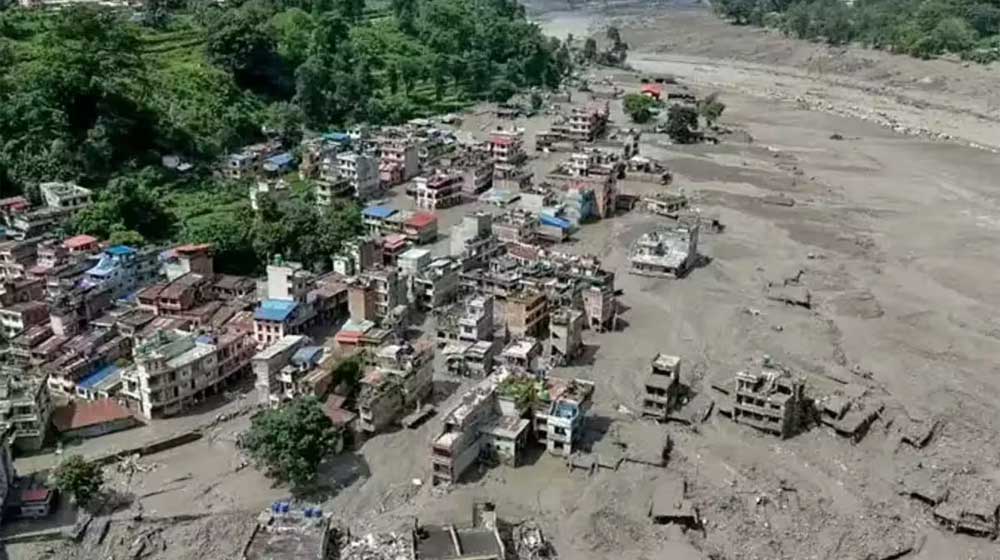
A catastrophic natural disaster has struck the Nepal-Tibet border region severely. Emergency rescue personnel launched massive search operations Thursday across affected areas. Therefore, Nepal Tibet floods missing numbers have reached approximately 1,000 people currently. At least 165 people have died from catastrophic flash floods and landslides. The disaster swept away entire villages, market districts and critical infrastructure. Rivers including Bhote Koshi and Trishuli experienced devastating surge conditions throughout affected regions.
Scientists initially suspected earthquake activity caused this disaster. However, seismic tracking agencies confirmed a different catastrophic origin. The United States Geological Survey clarified that a massive glacial collapse triggered the seismic signatures recorded. Additionally, subsequent debris flow near the border compounded destruction significantly. Satellite evaluations detailed by The Guardian and ICIMOD revealed the disaster’s mechanism precisely. A giant mass of ice and rock broke away from a mountain slope. This collapsed directly into the Lhende River, a key Bhote Koshi tributary. Consequently, the impact generated massive mud and sediment walls. Downstream river levels spiked by nine meters within just 30 minutes. Therefore, communities had virtually no warning before catastrophic flooding arrived.
Casualties and missing persons span both Nepal and Tibet extensively. Nepali police confirmed recovery of at least 162 bodies across seven districts. These districts stretch from northern Rasuwa down to Chitwan region. Meanwhile, Tibet’s Gyirong Port reported three fatalities according to Chinese state broadcaster CCTV. Additionally, over 260 people remain missing following a massive mudslide there. This mudslide engulfed multi-story buildings and transport vehicles completely. Therefore, Nepal Tibet floods missing figures accumulate from both affected nations.
Foreign tourist casualties add international dimension to this tragedy. Nepal News reported over 400 tourists unaccounted for following the disaster. These missing individuals include nationals from India, United States, Britain and Australia. Additionally, South Korea, Canada and several European nations have citizens missing. The flood particularly impacted Syabrubesi and Timure areas significantly. These locations serve as key gateways for high-altitude trekking routes. Furthermore, they provide access for religious pilgrimages toward Mount Kailash specifically.
Rescue operations continue facing significant logistical challenges. Nepali Army and Chinese emergency units deployed extensive resources immediately. Helicopters, speedboats and search dogs navigate through deep sludge conditions. However, ICIMOD experts warned about potential secondary flooding risks. Upstream river blockages could trigger additional flood waves. This would occur if temporary debris dams eventually give way. Therefore, rescue teams face ongoing danger throughout recovery operations. Finally, the Nepal Tibet floods missing search continues urgently as authorities race against time and challenging terrain conditions.