Iran FIFA World Cup 2026 squad arrives in Los Angeles amid an active peace deal, visa disputes, and a historic first between two nations at war
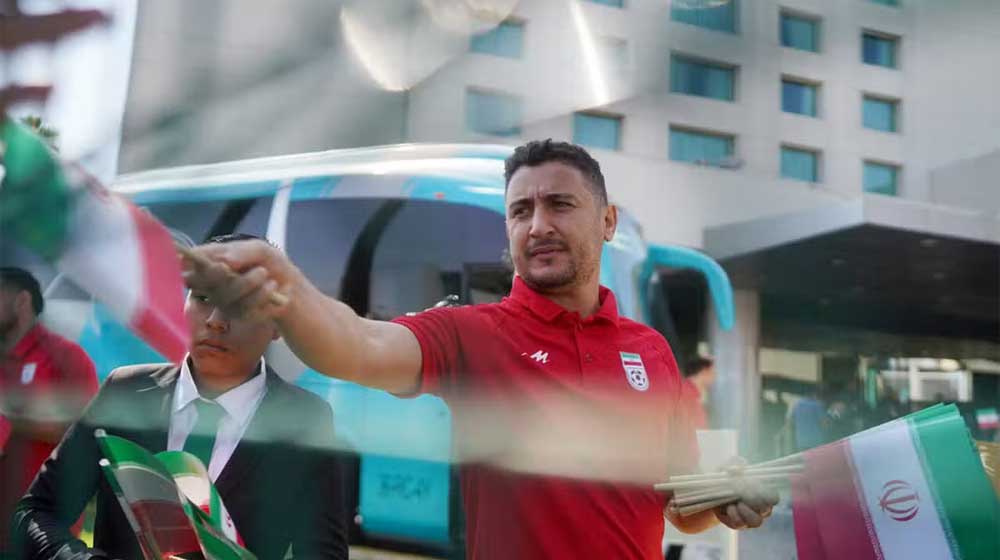
Iran’s football squad touched down at Los Angeles International Airport on Sunday. The arrival marked a historic and deeply unusual moment. A team had traveled to play a World Cup in the country its nation has been at war with for months.
The squad flew in from Tijuana, Mexico, after a sendoff from their temporary base camp. Iran had relocated from a sports complex in Arizona to Mexico late last month. The move followed joint US-Israeli strikes on Iran that began in late February. Staying at a US-based camp had become politically untenable.
Iran coach Amir Ghalenoei addressed the media at Los Angeles Stadium. He expressed pride in representing his country at the tournament. “I am very happy to be representing the great, proud and strong nation of Iran,” he said through a translator. He also hoped football would bring joy and draw cultures and countries closer together.
Monday’s Group G opener pits Iran against New Zealand at Los Angeles Stadium. It will be the first ever World Cup meeting between the two sides. However, the match takes place against an extraordinary backdrop. An ongoing conflict between the US and Iran and a newly announced peace deal both hang over the fixture. Therefore, the game carries a weight that goes far beyond football.
The political tension has shaped Iran’s preparations in disruptive ways. The United States refused visas to several members of Iran’s support staff. This happened despite the US serving as a co-host of the tournament. Furthermore, the camp move to Mexico means Iran must cross the border for each group-stage match. Ghalenoei acknowledged that travel disruptions and visa complications had negatively affected the squad.
Still, the team arrived. That arrival carries its own significance. This is the first World Cup since 1930 in which a host nation faces a country it is actively at war with. Moreover, the broader diplomatic context surrounding the Iran FIFA World Cup 2026 campaign has drawn global media attention to what would otherwise be a routine group-stage fixture.
Football has often served as a backdrop to geopolitical tension. Rarely, however, has a World Cup group game carried this much symbolic weight. Whatever happens on the pitch on Monday, the world will be watching for reasons well beyond the scoreline.