

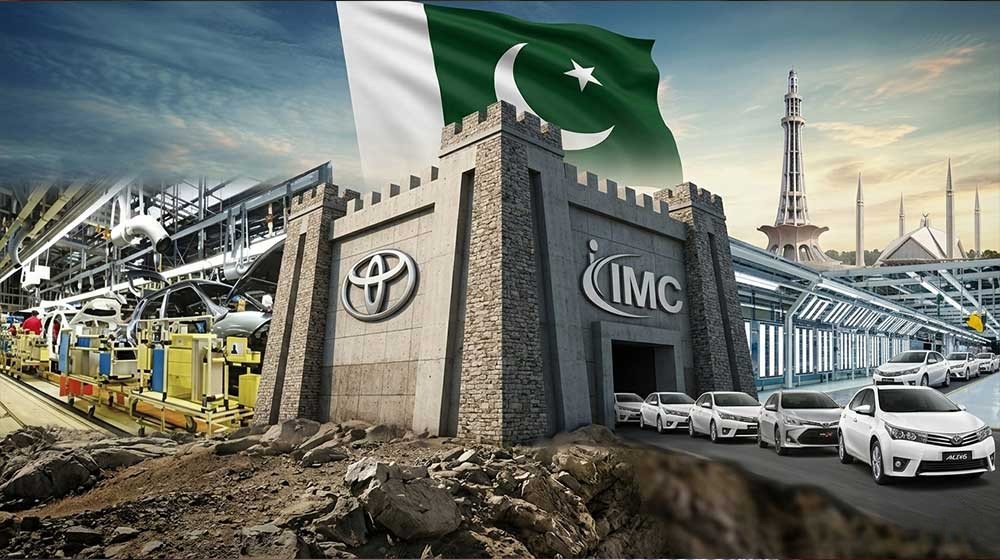
In Pakistan’s notoriously volatile auto industry — battered by high interest rates, currency swings, import restrictions, used-car floods, and geopolitical shocks — few companies stand as resilient as Indus Motor Company Limited (PSX: INDU), better known as Toyota Indus.
As one investor insightfully puts it:
“INDU held its fortress in tough times. That’s why I always suggest keeping a few buffer stocks in the portfolio. Tough cycles are unpredictable. Auto is a fragile sector, so I prefer companies with strong cash reserves — and INDU fits that profile.”
This isn’t hype. It’s backed by numbers, history, and a rock-solid balance sheet that has allowed INDU to not just survive but thrive when others struggled.
Company Overview & History
Indus Motor Company Limited was incorporated in December 1989 as a public limited company and listed on the Karachi Stock Exchange (now PSX) in 1992. It is a joint venture between the House of Habib (Pakistan), Toyota Motor Corporation, and Toyota Tsusho Corporation (Japan). Commercial production began in May 1993 at its state-of-the-art 109.5-acre manufacturing plant in Port Qasim, Karachi.
What started with just 20 vehicles per day (Corolla CKD kits) has grown into a daily capacity of 288 units on double shifts. Over 34+ years, IMC has sold more than 1.1 million vehicles and employs around 2,759 people while supporting thousands more through its vendor network.
IMC is the sole assembler and distributor of Toyota and Daihatsu vehicles in Pakistan, with 57 authorized 3S dealerships nationwide.
Flagship Products & “Make in Pakistan” Legacy
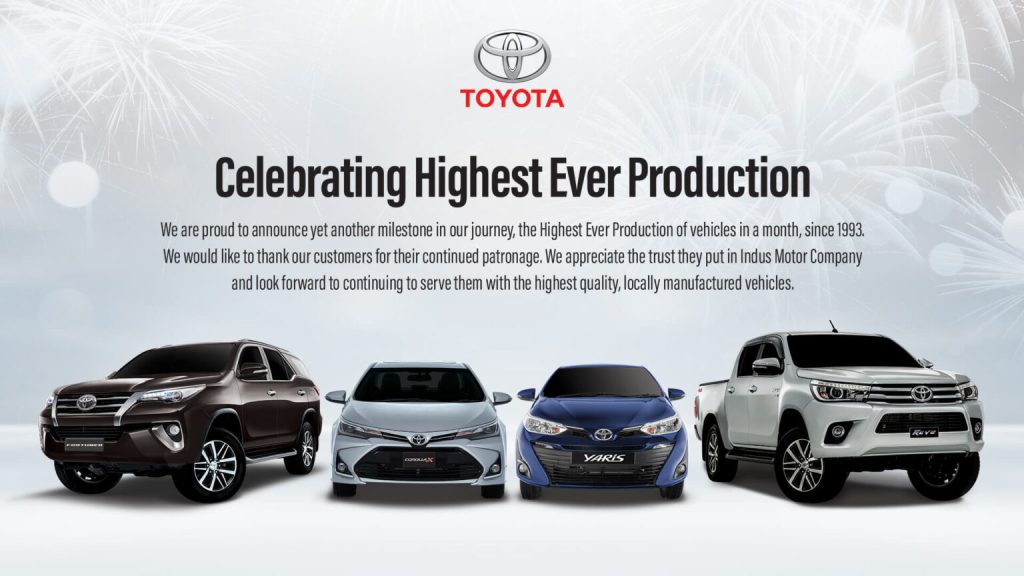
INDU’s lineup blends local assembly (CKD) with imported CBU models:
Locally Assembled (High Localization)
- Toyota Corolla (Altis X variants) – Pakistan’s perennial best-selling C-segment sedan
- Toyota Yaris (recent minor model change)
- Toyota Hilux / Revo (including GR-S) – Light commercial pickup king
- Toyota Fortuner (including GR-S) – Dominant SUV
- Toyota Corolla Cross – Pakistan’s first locally manufactured Hybrid Electric Vehicle (HEV), launched December 2023 with the highest-ever localization content (up to 90% of Corolla parts now made in Pakistan)
Imported CBU
- Camry & Prius Hybrids
- Land Cruiser Prado & 300 series
- Hiace, Coaster, and more
The company has pioneered localization with 53 vendors supplying parts worth PKR 270 million daily and recently began exporting “Make in Pakistan” Toyota vehicles to Oceania in 2024 — a historic milestone.
Financial Performance: Resilience in Numbers
INDU doesn’t just talk about strength — it delivers results even in downturns.
Key Highlights (PSX Data):
- FY2025 (ended June 2025): Net sales PKR 215.14 billion, Profit After Tax PKR 23.01 billion (EPS PKR 292.74)
- FY2024: Sales PKR 152.48 billion (down due to industry contraction), but PAT PKR 15.07 billion — up 56% YoY (EPS PKR 191.76)
- H1 FY2026 (Jul–Dec 2025): Sales PKR 119.20 billion (+40.4% YoY), PAT PKR 12.70 billion (+28% YoY, EPS PKR 161.60)
- Q2 FY26 alone: Sales +32.8%, PAT +22.9%
Despite a 33% volume drop in FY2024 (21,063 units sold vs 31,602 prior year), profits rose sharply thanks to cost reductions (Kaizen & localization), favorable exchange rates, and higher other income from investments.
The Cash Fortress At end-FY2024:
- Cash & bank balances: PKR 7.24 billion
- Short-term investments: PKR 76.54 billion (up 73% YoY)
This massive liquidity generated strong other income (up 43% in recent quarters) and funded generous dividends — multiple interim payouts plus final dividends often exceeding 400–500%. Shareholders have been rewarded handsomely even during industry lows.
Why Indus is the Ultimate Buffer Stock
Pakistan’s auto sector is fragile: high taxes (up to 50% on local vehicles), used-car import surges, energy crises, and Middle East shipping risks (which INDU itself flagged in early 2026). Yet INDU consistently outperforms peers.
- Strong brand loyalty (Corolla remains #1 sedan)
- High localization shields against currency volatility
- Toyota Way culture of continuous improvement (Kaizen)
- Massive cash reserves act as a war chest — funding dividends, R&D (hybrids, solar plant), and weathering storms without debt stress
As the investor highlighted: tough cycles are unpredictable. While many auto stocks bleed cash and cut production, INDU held its fortress — posting profit growth even when industry sales fell 18%. Its cash pile and operational discipline make it a true defensive play in a high-risk sector.
Sustainability edge: 6.6 MW rooftop solar (Pakistan’s largest at the time), first local HEV reducing CO₂ by 35% per vehicle, and over 870,000 trees planted since 2018.
Full Summary: Why Indus Belongs in Every Long-Term Portfolio
Indus Motor Company Limited is more than Pakistan’s Toyota assembler — it is a national industrial champion. With 35+ years of proven execution, market-leading products, unmatched localization, and a balance sheet fortified by over PKR 83 billion in cash & investments (as of FY2024), INDU has repeatedly demonstrated it can navigate Pakistan’s economic turbulence better than peers.
Strengths at a Glance
- Dominant market position in sedans & pickups
- Hybrid leadership (Corolla Cross)
- Export ambitions unlocked
- Shareholder-friendly (high & consistent dividends)
- Cash-rich fortress protecting against volatility
Risks to Watch
- Geopolitical supply-chain disruptions (Middle East tensions)
- Policy changes on used-car imports or duties
- Macro slowdowns affecting consumer financing
Outlook (March 2026) With economic stabilization, lower inflation, and recovering volumes already visible in H1 FY26 (+40% sales growth), INDU is poised for strong FY2026 performance. Analysts see significant upside; the stock remains a favorite defensive auto play on the PSX.
Whether you’re a retail investor seeking stability or a long-term holder wanting quality + dividends, INDU is the buffer stock that delivers peace of mind in Pakistan’s unpredictable markets.
Toyota Indus — Quality that lasts a lifetime. Resilience that lasts through cycles.
Data sourced from official Toyota Indus website, PSX filings, and FY2024 Annual Report (latest available as of March 2026). Always conduct your own due diligence and consult a financial advisor before investing.
Drive safe — and invest smarter.