
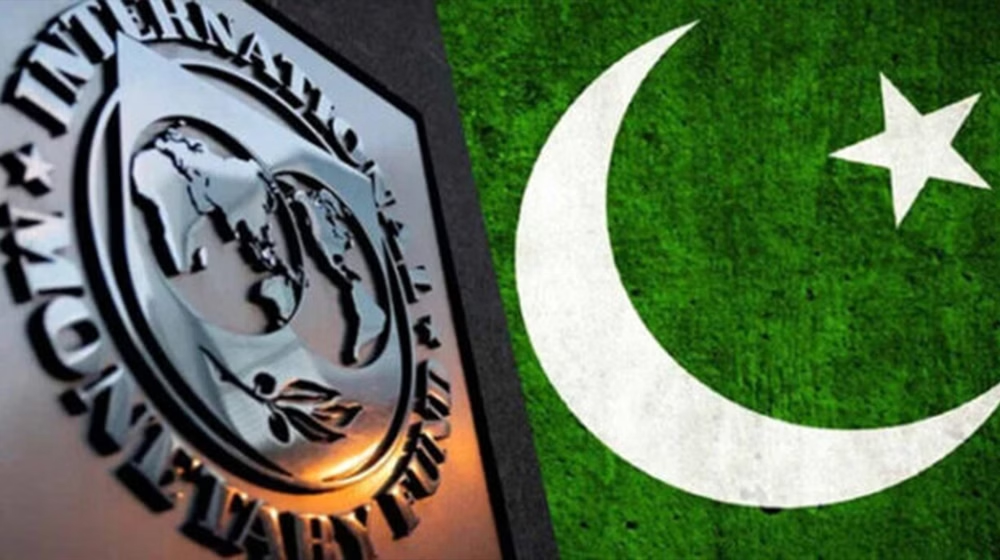
Pakistan and the International Monetary Fund (IMF) have concluded their scheduled review without reaching a staff-level agreement, opting instead to continue negotiations in the coming days. While the IMF mission, led by Iva Petrova, reported “considerable progress,” the evolving geopolitical crisis in the Middle East has introduced significant uncertainty into Pakistan’s economic projections.
The discussions, which took place between February 25 and March 11, 2026, focused on the third review of the $7 billion Extended Fund Facility (EFF) and the Resilience and Sustainability Facility (RSF).
Key Pillars of the Ongoing Negotiations
Despite the delay in a final agreement, the IMF noted that Pakistan’s program implementation remained broadly on track through February 2026. Current talks are centered on:
- Fiscal & Monetary Discipline: Sustaining fiscal consolidation and maintaining a tight monetary policy to keep inflation within the State Bank of Pakistan’s target range.
- Energy Sector Viability: Advancing reforms to stabilize the country’s struggling power and gas sectors.
- Structural Reforms: Boosting economic growth while protecting social safety nets and increasing health and education spending.
- Climate Resilience: Evaluating progress on reforms under the RSF framework.
The Geopolitical Wildcard
The primary hurdle to finalizing the agreement appears to be the high level of external risk. Sources indicate that traditional forecasting models are struggling to account for the “fluid” nature of the current global environment:
“The volatile environment has made key projections increasingly difficult. Pakistan’s oil import bill, for instance, cannot be estimated with precision amid rapidly shifting global energy prices.”
Critical Concerns Include:
- Energy Prices: Volatile global crude prices are complicating balance-of-payments projections.
- Shipping Disruptions: Potential prolonged blockades in the Strait of Hormuz threaten both oil imports and export orders.
- Financing Gaps: Tighter global financial conditions may impact Pakistan’s external financing needs for the upcoming fiscal year.
The IMF and Pakistani authorities aim to reconcile these projections and reach an agreement in the coming days as they more fully assess the impact of these global developments.
Would you like me to create a summary table comparing Pakistan’s current economic targets against these new geopolitical risks?