
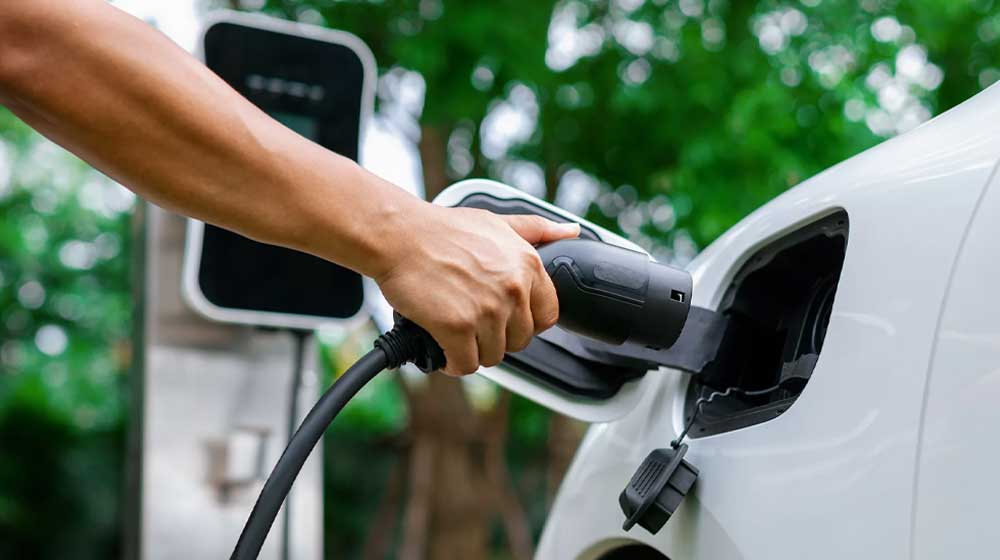
Pakistan plans to set up around 3,000 public electric vehicle (EV) charging stations by 2030, the Ministry of Industries and Production has told the National Assembly. The ministry gave the figure in a written reply to a question from lawmaker Malik Shakir Bashir Awan.
40 fast chargers come first
The first phase covers 40 fast-charging stations. These will go on motorways and selected sections of the National Highway N-5, the ministry said. They are part of the New Energy Vehicle (NEV) Policy 2025-30, the government’s plan to move Pakistan towards electric transport.
Chargers are planned about every 50 kilometres on major highways. For an EV owner, that means a 400-km trip would pass roughly eight charging points. Earlier reports on the policy, by TechJuice and Battery Industry, put the average gap at about 105 km, so the 50 km plan means closer spacing.
The ministry also wants fuel stations to add EV chargers. It plans slower chargers too, for use during longer stops. Battery-swapping stations are planned for electric bikes and rickshaws, where a rider swaps an empty battery for a full one.
Where things stand today
Some of this work has already started. In July, ProPakistani reported that ultrafast chargers are working at the Chakri, Kallar Kahar, Bhera and Sial Mor service areas on the M-2 Motorway. Each station has a 360 kVA charger that can serve four cars at once. Most EVs charge in 15 to 20 minutes, according to the announcement.
In late June, officials told a National Assembly committee that more than 100 charging stations had been licensed, APP reported. That is a small share of the 3,000 target, which leaves about four years to cover the rest.
Help for private investors
To attract private companies, the ministry says it is offering a separate electricity rate for charging stations and faster electricity connections. It also plans joint projects with private firms, including “viability gap funding”. This means government money for projects that might not make a profit at first.
The ministry says 3,800 investors showed interest last year in building charging stations.