
Punjab will expand its electric bus network significantly across underserved regions. South Punjab electric buses will soon arrive in Kot Addu and Taunsa Sharif among other areas. Chief Minister Maryam Nawaz chaired a meeting to review progress on the province’s transport and mass transit projects. Officials briefed the meeting on the wider electric bus rollout as well as ongoing work on mass transit systems in Faisalabad and Gujranwala.
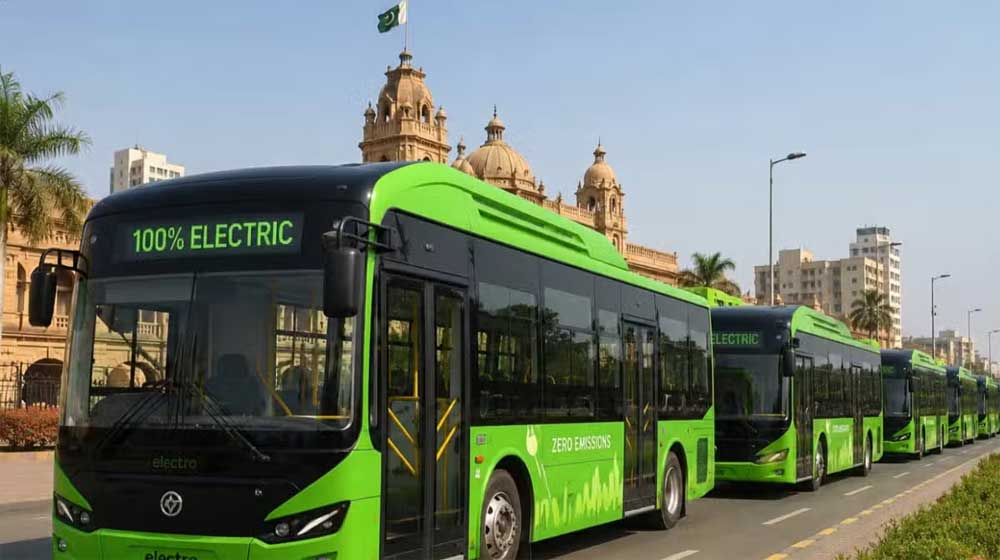
The meeting revealed substantial progress on Punjab’s green transport initiative. Officials reported that the government will convert 400 buses currently operating in Punjab into electric buses as part of the province’s shift toward cleaner public transport. Additionally, 189 new electric buses for multiple districts await soft launch deployment. Punjab will also receive another 488 electric buses, which officials will dispatch from a Chinese port on July 20. So significant capacity will arrive soon to support the rollout across numerous districts.
During the meeting, Maryam Nawaz directed authorities to start South Punjab electric buses services at the earliest in Kot Addu, Talagang, and Taunsa Sharif. Additionally, she ordered service launches in Vehari and Lodhran. Therefore, provincial leadership is giving multiple districts priority attention for expansion.
She further instructed officials to raise the number of electric buses in Vehari, Lodhran, and Nankana Sahib. Moreover, she said Punjab should allocate at least 15 buses to districts with fewer than that currently. This directive ensures equitable distribution across smaller towns and cities. So even less-populated areas will receive adequate transit coverage.
The chief minister also reviewed the Gujranwala mass transit project during the meeting. Officials approved one more station on the 19.5-kilometre route, increasing the total number of stations to 25. Therefore, authorities are making the rapid transit network more comprehensive. She also directed strict compliance with safety measures during construction work on mass transit projects. So worker and public safety remain paramount concerns.
The South Punjab electric buses initiative represents a major commitment to environmental sustainability. Electric vehicles reduce air pollution significantly compared to diesel buses. Moreover, they lower operating costs long-term despite higher initial investments. Additionally, they reduce noise pollution affecting urban residents. So the environmental and quality-of-life benefits extend beyond just transportation improvements.
This expansion demonstrates Punjab’s recognition that public transport must reach all regions fairly. Smaller towns and districts historically lacked adequate transit services. Therefore, this initiative corrects that imbalance. Furthermore, improved transport connectivity supports economic development in less-developed areas. Finally, South Punjab electric buses will enhance mobility for residents in districts that previously lacked modern public transit options.