Indian workers training AI robots by filming everyday chores are fueling a billion-dollar industry that could ultimately automate their own work
With a smartphone strapped to her head, Nagireddy Sriramyachandra films herself slicing mangoes in her Chennai kitchen. The footage trains AI-powered robots to handle household chores. She earns just over $2 for an hour of video. Moreover, that modest sum has become valuable to global technology firms racing to build robots that can replicate human movement.
Sriramyachandra is 25 years old and one of a growing number of AI data trainers across India. “Who else will give you 250 rupees an hour just for doing housework?” she said. She also added that she might get a robot herself in the future — an observation that cuts to the heart of this story’s central irony.
Why Are Indian Workers Training AI Robots?
Companies need real-world movement data to teach robots how humans behave. Chatbots and image generators simply cannot provide this. Workers therefore record themselves doing everyday tasks. Furthermore, firms in India offer this work cheaply and at enormous scale. Consequently, India has become a global hub for AI data collection of this kind.
Developers call this type of recording “egocentric data.” First-person footage feeds into specialized AI models. The goal is to help robots copy human movement in real environments. This is a significantly harder task than processing text or images. Therefore, human demonstrators remain essential for now.
What Tasks Are Workers Recording?
Clients request specific household tasks for training data. These include folding clothes, making coffee, and preparing sandwiches. Objectways head Ravi Shankar said the goal is for robots to eventually take over such repetitive jobs. He additionally argues this would free workers for other kinds of work.
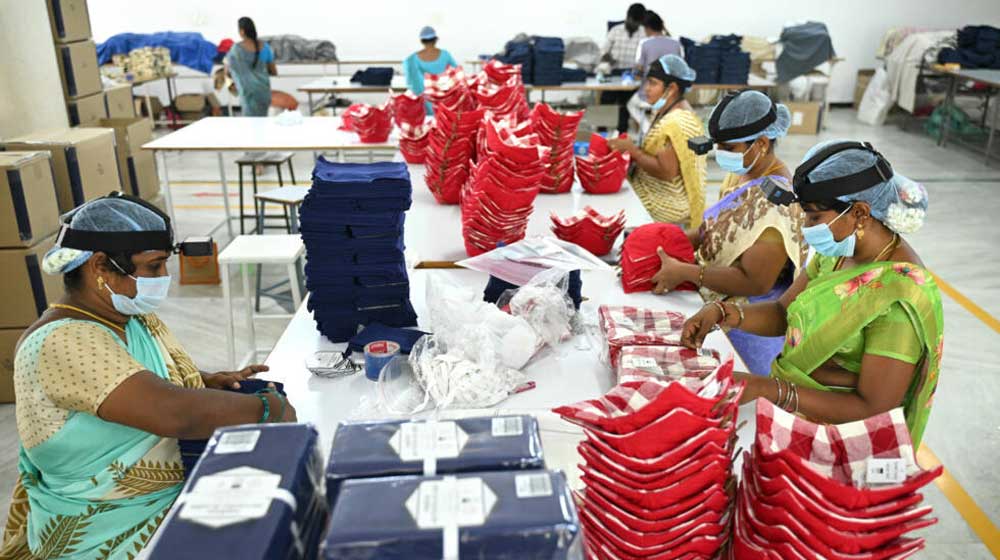
The humanoid robot market is meanwhile expanding rapidly. Morgan Stanley predicts more than a billion robots could be in use by 2050. Most would operate in industrial and commercial settings. Additionally, Objectways already employs workers in Tamil Nadu, filming in textile factories using head cameras and smart glasses supplied by the company.
Could AI Robots Replace India’s Informal Workers?
India is building its AI industry while also acknowledging the risks automation carries. Government think tank NITI Aayog warned that most debate around AI and labor focuses on white-collar jobs. However, it stressed that far less attention goes to the country’s 490 million informal workers.
The think tank examined how AI could affect dozens of professions. These range from cobblers and sewer cleaners to farmers and tea sellers. In Bengaluru, 55-year-old Ponni has spent a decade making flower garlands on the roadside. She also filmed herself wearing a phone on her forehead for recordings. “The next generation, who might have to do work similar to mine, they will face a problem,” she said.
What Is It Like to Work as an AI Data Trainer?
At an Objectways studio, trainers film themselves performing chores in furnished fake apartments. The wallpaper changes periodically to add variety. Each video runs about four minutes, and workers can record up to 90 videos a day. Many describe the work as repetitive but nevertheless reliable income.
Engineering graduate Rani N., 21, folds towels in nearly every position imaginable. “Today I sit here, tomorrow I stand there,” she said. She called the job tolerable but still acknowledged the constant awareness of being filmed. Meanwhile, in nearby rooms, other workers arrange everyday objects in patterns for depth-sensor cameras. Some contributors additionally wear motion-sensor bands on their wrists, hands, and legs.
Will AI Robots and Humans Work Together?
Not everyone believes robots will simply replace human workers. Manish Agarwal of Bengaluru-based Humyn Labs records conversations alongside video. Contributors discuss topics from politics to entertainment so clients can study speech patterns. Furthermore, Agarwal envisions a future where humans and robots work side by side. He described a scenario where a welder in India manages a welding robot operating in another country entirely.
For now, Indian workers training AI robots occupy a strange middle ground. They are building the very technology that may one day reduce the need for their own labor. Still, for many of them, the immediate reality is simple — it pays, it is accessible, and it requires nothing more than a smartphone and a willingness to be watched.