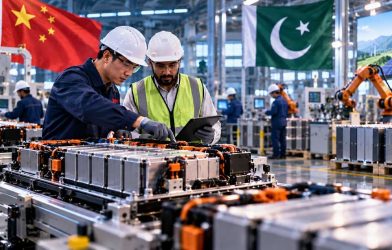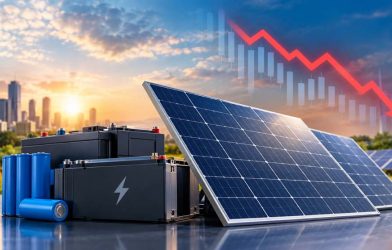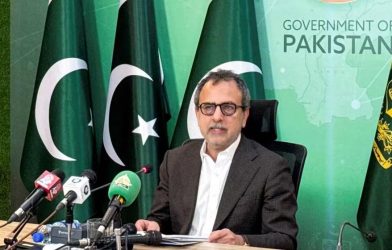

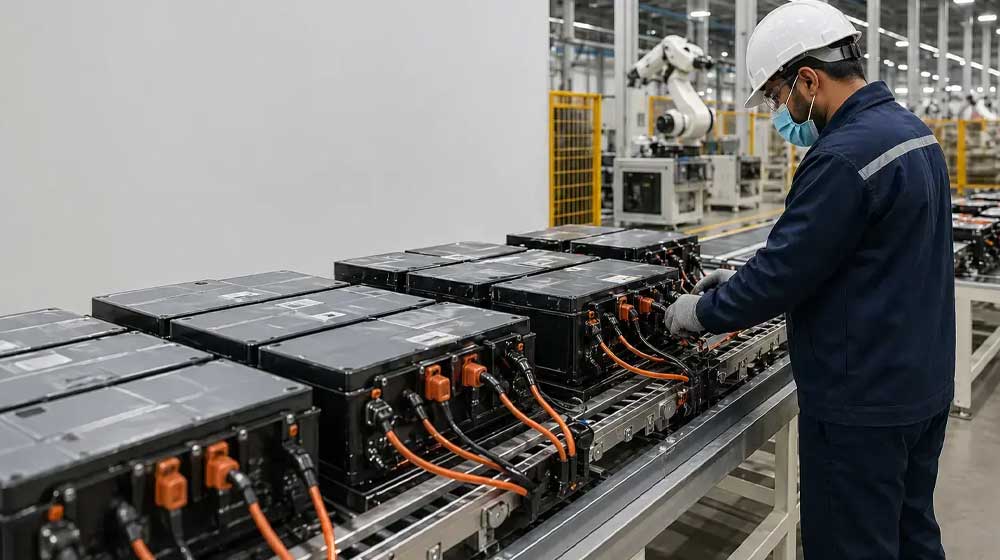
Pakistan imported more than 4.5 gigawatts of battery storage equipment in the first six months of 2026 — close to half of everything the country has ever imported, which stands at about 9.5 gigawatts. A representative of the Pakistan Solar Association gave the figure at a parliamentary dialogue in Islamabad organised by the Parliamentary Forum on Energy and Economy, reported by Business Recorder on October 30, 2026.
One note on the number: it was given in gigawatts, which measures power, not gigawatt-hours, which measures how much electricity a battery can hold. So it is not directly comparable with customs-based estimates of storage capacity.
Exporting now pays Rs. 11
The reason for the rush is not complicated, and it is the part most reports leave out.
Until this year, rooftop solar owners used net metering. A unit you sent to the grid cancelled out a unit you took from it. In February 2026, NEPRA — the National Electric Power Regulatory Authority — notified the Prosumer Regulations 2026 and replaced that with net billing for new connections.
Under net billing, the two prices are separate. Units you export are bought at the national average purchase price, widely reported at around Rs. 10 to Rs. 11 per unit. Units you take from the grid are still charged at your normal tariff, which for most homes runs from the high Rs. 30s to over Rs. 50 per unit.
That one change flipped the maths. A unit stored in a battery and used after sunset saves you the full tariff. The same unit sold to the grid earns about a quarter of that. So people stopped exporting and started storing.
Rs. 250,000 for a small battery
The catch is the price. Pakistan Solar Association Vice Chairman Chaudhry Uzair told the dialogue that storage equipment carries a combined tax and customs duty load of 35 to 40 percent, and that a basic 5-kilowatt-hour battery costs more than Rs. 250,000.
A 5 kWh battery is small. It will run fans, lights, a fridge and a few sockets through an evening. It will not run air conditioning for long. At that price, with duties on top, storage stays out of reach for most households.
That gap worries parliamentarians. MNA Chaudhry Mubeen Arif Jutt said factory owners are now spending up to twice as much on their own solar and battery systems as on actual production machinery, just to get affordable power. He warned that if procurement signals do not improve, utilities will end up penalising the consumers who cannot afford to leave.
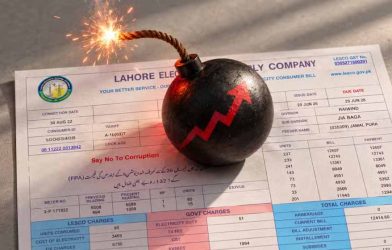
It is the same problem that followed the solar boom. Every customer who walks away from the grid leaves the fixed costs of the system spread across fewer bills — and those remaining bills belong to people with the least room to pay.
Dumping ground worries
MNA Nafisa Shah, co-convener of the forum, said Pakistan cannot be allowed to become a “dumping ground” for substandard batteries arriving without safety standards, testing facilities or recycling rules. Lithium batteries that are poorly made or badly installed are a fire risk, and the country has no system yet for disposing of them once they die.
On the grid side, LESCO Chairman Amir Zia said distribution transformers now deal with heavy reverse flow from rooftop solar during the day, followed by a sharp demand spike in the evening. Batteries, he said, are the way to hold the daytime surplus and release it at night.
Some of that is being planned. NEPRA is moving to treat battery storage as a regulated asset, which would let distribution companies install batteries to relieve overloaded transformers instead of building new grid stations, at roughly half the capital cost. A Power Division official said the 2026 generation expansion plan is being prepared with about 1,500 megawatt-hours of utility-scale storage — 1,000 on the transmission side and 500 across distribution networks.
Senators Sanaullah Baloch and Phullain raised a separate point: Balochistan may hold lithium deposits, and argued that mineral extraction should feed local battery manufacturing rather than be handed over without provincial agreement.
The participants ended with broad agreement that storage is no longer optional for Pakistan’s power system. The harder question — who can afford it, and who pays for the grid everyone else still needs — was left open.