Pakistan has taken a decisive step away from cash. The State Bank of Pakistan (SBP) says 92 percent of retail payment transactions in fiscal year 2025-26 ran through digital channels. That figure was 88 percent a year earlier.
The four-point rise may seem small on paper. Still, it points to steady momentum. Overall digital payments grew 65 percent year-on-year to 13.2 billion transactions. Moreover, the SBP’s latest Annual Payment Systems Review counted 14.3 billion retail transactions through formal banking channels.
Their combined value reached Rs. 673 trillion, even as volume rose 58 percent and value climbed 10 percent. Mobile phones also drove most of the growth. Mobile-based solutions recorded more than 11.1 billion transactions, a 79 percent jump from FY25.
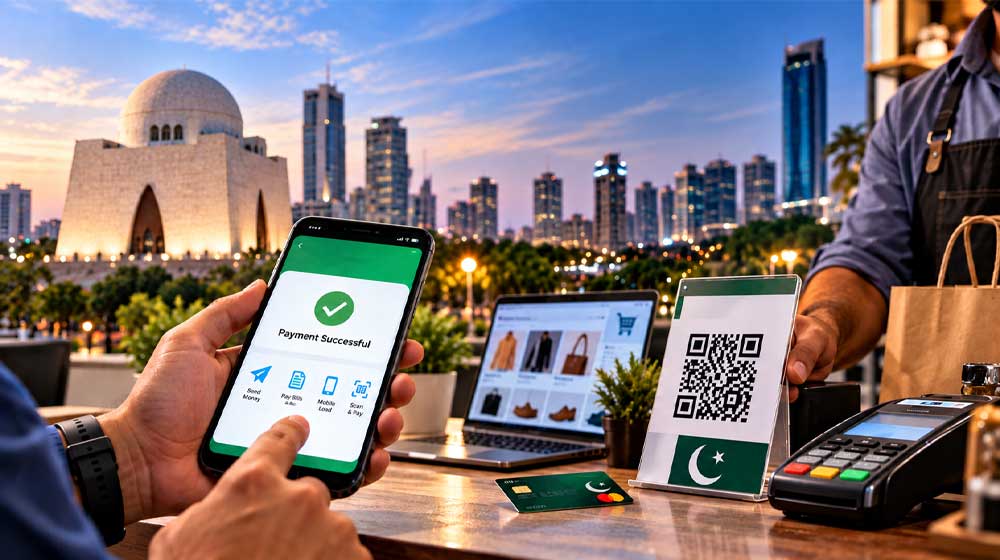
Meanwhile, internet banking portals handled around 0.3 billion transactions, up 15 percent. Those numbers show how comfortable users have become with phone-based banking.
Infrastructure expanded alongside usage. Pakistan now has 337,791 point-of-sale terminals across 295,367 merchant locations. That spread gives shoppers more places to pay without cash. Furthermore, those terminals handled nearly 1.5 million card payments daily, compared with around 1 million in FY25.
That daily volume shows merchants are also accepting cards more widely. Smartphone banking also gained ground. Branchless banking app users reached 99.1 million, and users of bank mobile applications rose to 30.4 million.
Account-based online payments made up 96 percent of e-commerce transactions through banking channels. Online shoppers clearly prefer paying straight from their bank accounts. Consumers, in short, now have more convenient options than before.
The SBP says consumers, businesses and financial institutions keep adopting digital channels. A major milestone came in August 2025 with the launch of PRISM+. The system moved Pakistan’s real-time gross settlement to the ISO 20022 standard.
Therefore, the upgrade aims to improve efficiency, transparency and security across retail and large-value transactions. Such upgrades matter because payment systems must keep pace with growing demand. Finally, the trend shows digital payments becoming a daily habit for Pakistanis.