

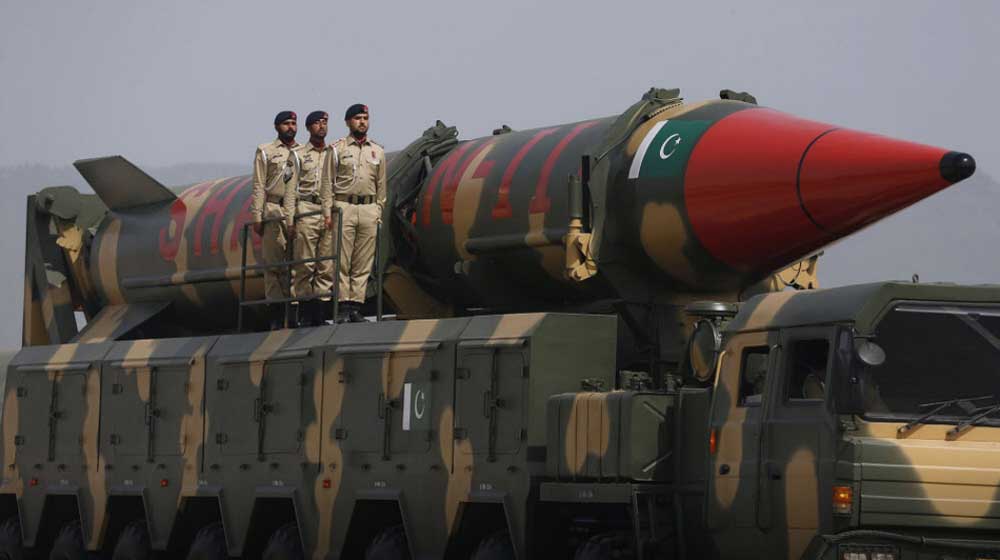
The recent 2026 Annual Threat Assessment by the U.S. Intelligence Community, presented by Director of National Intelligence Tulsi Gabbard, has drawn attention to evolving global missile threats, including those from Pakistan.
In her testimony before the Senate Intelligence Committee on March 18, 2026, Gabbard stated that Russia, China, North Korea, Iran, and Pakistan are researching and developing various missile delivery systems—both novel/advanced and traditional—with nuclear and conventional payloads. She emphasized that these developments could place the U.S. homeland within range. Specifically regarding Pakistan, she noted: “Pakistan’s long-range ballistic missile development potentially could include ICBMs with the range capable of striking the Homeland.” The assessment projects a significant increase in global missile threats, from over 3,000 currently to more than 16,000 by 2035.
Pakistan’s current publicly known ballistic missiles, such as the Shaheen-III (with a reported range of around 2,750 km), are designed primarily for regional deterrence, particularly in the context of South Asian security dynamics with India. Pakistan has consistently maintained that its missile program is defensive in nature and focused on maintaining strategic balance in its immediate region.
Pakistan’s Response Pakistani officials and former diplomats have rejected characterizations of their missile capabilities as a direct threat to the United States. For instance, reactions in Pakistani media and statements from former ambassadors have described the U.S. concerns as overstated or misaligned with Pakistan’s stated strategic priorities. Islamabad has emphasized that its arsenal is exclusively oriented toward regional threats, particularly India, and not intended to target distant powers like the U.S. No official denial from the Pakistani government explicitly addressing Gabbard’s March 2026 remarks has been widely reported in major outlets, but prior similar U.S. concerns (from late 2024 onward) prompted Pakistan to affirm that its program preserves peace and stability in South Asia without broader aggressive intent.
This development highlights ongoing U.S. monitoring of missile proliferation trends worldwide, even as Pakistan’s program remains regionally focused according to its official posture. The inclusion of Pakistan in the assessment alongside established nuclear powers underscores broader concerns about potential future expansions in range and capability across several nations.
Summary
In the 2026 U.S. Annual Threat Assessment, Director of National Intelligence Tulsi Gabbard warned that Pakistan’s long-range ballistic missile development could potentially evolve to include ICBMs capable of reaching the U.S. homeland, grouping it with Russia, China, North Korea, and Iran amid projected global missile growth to over 16,000 by 2035. Pakistan has denied posing any threat to the U.S., asserting its missiles are exclusively for regional deterrence against India and not directed at distant targets like America.