

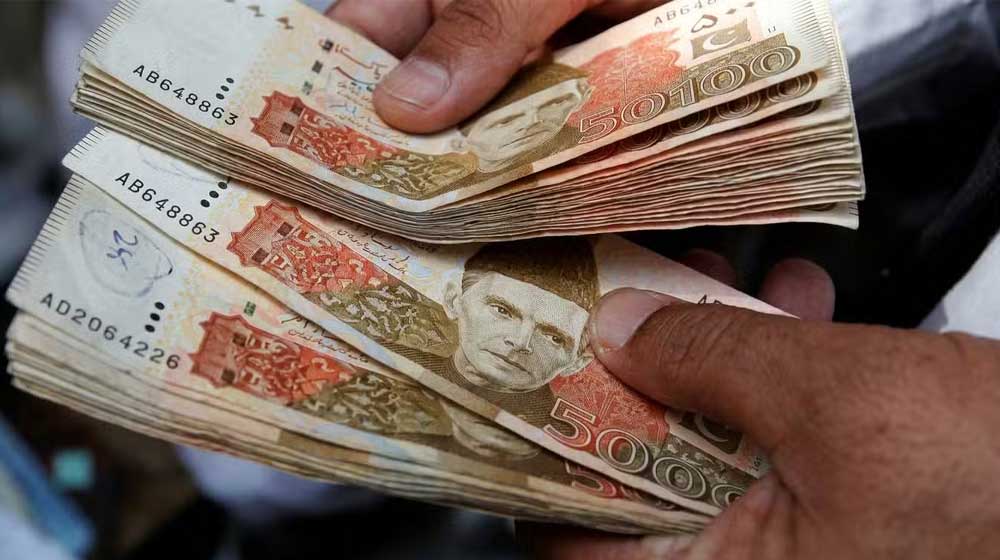
An adult in Pakistan needs an income of about Rs. 121,443 a month to sit in the country’s top 10 percent, according to the World Inequality Database (WID), the research project run by the Paris-based World Inequality Lab. That is roughly three times the national minimum wage, which rose to Rs. 40,700 a month under the Finance Act 2026 on July 1, 2026.
The figures come from WID’s 2024 income estimates, expressed in 2025 rates.
| Group | Yearly entry point | Monthly entry point |
|---|---|---|
| Top 10% | Rs. 1.46 million | about Rs. 121,443 |
| Top 5% | Rs. 2.26 million | about Rs. 188,511 |
| Top 1% | Rs. 5.28 million | about Rs. 439,852 |
| Top 0.1% | Rs. 23.2 million | about Rs. 1.93 million |
Entry points are only the floor of each group. Inside the top 10 percent, the average income is about Rs. 3.63 million a year, or roughly Rs. 302,000 a month. Inside the top 1 percent, the average is Rs. 14.1 million a year, about Rs. 1.18 million a month. The average Pakistani adult earns about Rs. 70,600 a month.
This is not a salary number
Before anyone checks their payslip against that table, it is worth knowing what WID is counting.
The measure is pre-tax national income per adult. It covers wages, but also money made from a business, from rent, and from other assets. Someone with a modest salary and two shops on rent may clear the top 10 percent line without a large pay packet.
WID also splits a married couple’s income equally between both partners. So a household where one person earns Rs. 240,000 and the other earns nothing is counted as two adults on Rs. 120,000 each — both just inside the top 10 percent.
That is why these thresholds are not salary benchmarks. They describe where adults sit across the whole income distribution, not what a job pays.
What the tax system says
The numbers still line up usefully with the tax code. A salaried person earning Rs. 1.46 million a year falls in the FBR slab running from Rs. 1.2 million to Rs. 2.2 million, where tax works out to Rs. 6,000 plus 11 percent of the amount above Rs. 1.2 million — about Rs. 34,600 for the year, or under Rs. 3,000 a month.
So the income that beats 90 percent of adults in Pakistan is taxed at a fairly gentle rate. The sharper rates begin well above it. The 35 percent top slab only starts at Rs. 7 million a year, which is above even the top 1 percent entry point.
Half the country, 17 percent of the income
The shares behind these thresholds explain why the bar sits where it does. WID data shows the top 10 percent take 42.8 percent of national income and the top 1 percent alone take 16.7 percent, while the bottom half of the population shares 17.3 percent.
Wealth is tighter still. The richest 10 percent own 58.5 percent of all personal wealth and the top 1 percent hold 24 percent.
Those figures track the World Inequality Report 2026, published last December, which put the top 10 percent income share at about 42 percent and their wealth share at 59 percent. That report also found the gap between the top 10 percent and the bottom 50 percent narrowed only slightly between 2014 and 2024, from 22.0 to 21.4.
The other end of the scale
The low entry point says less about how rich the top is than about how little most people earn. The World Bank put Pakistan’s poverty rate at 29 percent in fiscal year 2024-25, with about 72.6 million people below the poverty line in 2024. More than 57.6 million people, around 23 percent of the population, were living on less than $3 a day. At the $8.30-a-day line, about 218.8 million people — 87.1 percent — fell below it.
In a country where nearly nine in ten people are under that line, Rs. 121,000 a month does not buy a wealthy life. It buys a place in the top tenth, which is a different thing.