
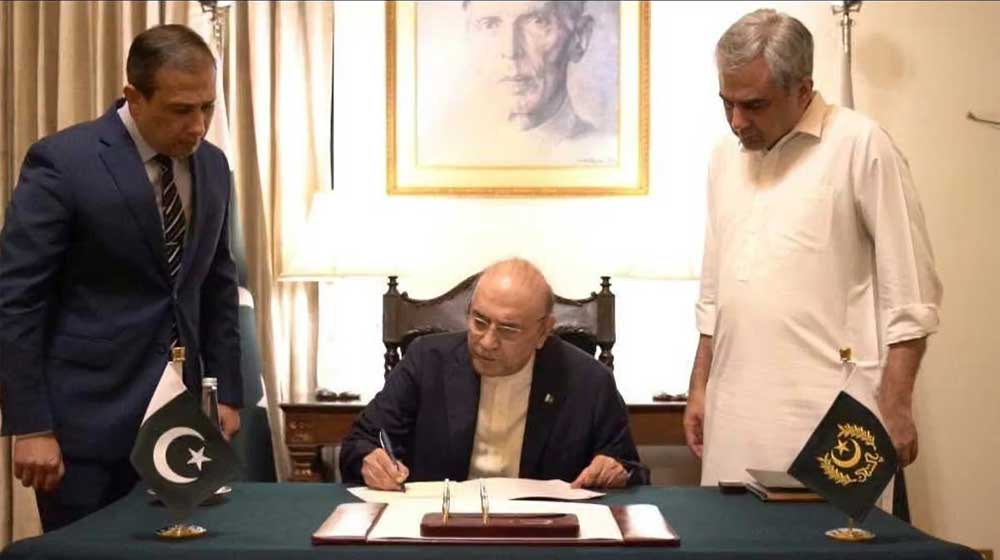
President Asif Ali Zardari has reportedly declared an emergency in Khyber Pakhtunkhwa, removing Chief Minister Sohail Afridi and his provincial administration.
The decision follows growing security concerns, terrorist attacks, and political tensions between the federal government and Pakistan Tehreek-e-Insaf (PTI).
According to the proclamation, authorities invoked Articles 232 and 234 of Pakistan’s Constitution to introduce emergency measures.
Moreover, executive authority has shifted to Governor Faisal Karim Kundi, who will oversee provincial administration under federal directives.
The provincial assembly remains intact, but its legislative powers have reportedly shifted to Parliament.
Meanwhile, the federal government has appointed Dr. Muhammad Fakhr Alam Irfan as the province’s new chief secretary.
The Grade 22 officer previously served as secretary of the Power Division.
Additionally, reports indicate that former Chief Secretary Shahab Ali Shah and 15 other senior officials have lost their positions.
Governor Kundi welcomed the decision, saying residents wanted peace, stability, and development.
He also announced an advisory council to supervise important provincial departments, including finance, education, health, and energy.
However, the KP Emergency has triggered strong criticism from PTI leaders.
PTI Chairman Barrister Gohar Ali Khan condemned the decision, calling it undemocratic and harmful to provincial autonomy.
He argued that the federal government must respect the electoral mandate of Khyber Pakhtunkhwa’s residents.
Furthermore, Gohar announced that PTI would challenge the decision through constitutional and legal channels.
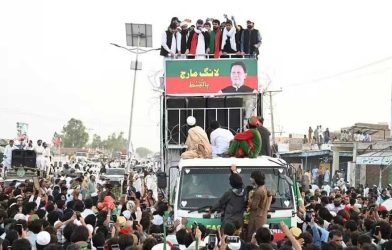
Meanwhile, PTI workers reportedly began protesting in Bara, Khyber district, following the announcement.
Reports also emerged concerning the arrests of Sohail Afridi and PTI leader Junaid Akbar Khan. However, the circumstances surrounding those reports remain unclear.
Prime Minister Shehbaz Sharif defended the government’s position, citing security threats and concerns about economic stability.
He also expressed concern over terrorist attacks targeting civilians and security personnel.
Additionally, federal authorities argued that the provincial administration had failed to address worsening security conditions effectively.
Under Article 234, the president may assume certain provincial government functions when constitutional machinery breaks down.
However, such extraordinary measures remain subject to constitutional procedures and parliamentary oversight.
The political confrontation could intensify as PTI prepares legal challenges and continues its protest movement.
Meanwhile, federal authorities face growing pressure to maintain security and restore political stability.
The developments mark a significant moment in Pakistan’s ongoing political crisis, with further legal and constitutional disputes expected.