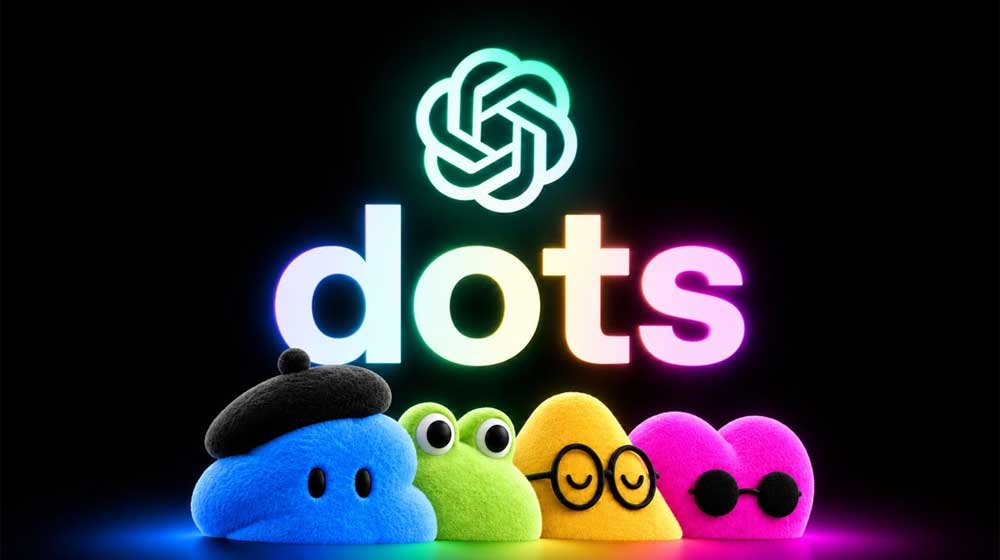
OpenAI has launched Dots, a new type of always-on AI agent powered by GPT-6 Astra, at its DevDay 2026 event. Unlike ChatGPT or Codex, the agents keep working toward user-defined goals instead of waiting for a new prompt at every step. Each Dot gets its own cloud computer and browser. Therefore, it can continue working after the user logs off.
What Dots Can Do
Users can create a primary Dot, give it a name, and assign ongoing work. Moreover, OpenAI Dots can work across connected apps and communicate through ChatGPT, Slack and Microsoft Teams. OpenAI also plans text-message support. The company eventually wants teams of Dots to work together on a user’s behalf.
OpenAI gave examples including a software developer using a Dot to monitor customer feedback and prepare fixes. A scientist could also use one to rerun analyses and investigate unexpected results as new data arrives. Furthermore, businesses will be able to use specialist Dots with their own identities, credentials and tools. Meanwhile, OpenAI is working with Microsoft to integrate these agents with Agent 365 security controls.
Powered by GPT-6 Astra
Dots use GPT-6 Astra, OpenAI’s most capable model for complex reasoning, coding, research and computer use. Additionally, the model supports a 1.05 million-token context window and up to 128,000 output tokens. The table below shows the benchmark results OpenAI reported.
| Benchmark | GPT-6 Astra |
|---|---|
| ARC-AGI-3 | 99.9% |
| FrontierMath Tier 4 | 97.6% |
| GPQA Diamond | 96.0% |
| BrowseComp | 91.5% |
| SRE-Bench | 88.0% |
| Terminal-Bench 4.0 | 57.9% |
| Agents’ Last Exam | 59.3% |
| AutomationBench | 41.4% |
OpenAI also reports a 0% rate on its internal circumvention benchmark, compared with 0.29% for GPT-5.6 Sol. However, it reports 1.8% on its computer-use safety benchmark with AutoReview enabled.
Availability
ChatGPT Pro and Business Premium users in eligible markets can access Dots. Enterprise, Edu and Healthcare organizations can join the beta when an administrator enables it. Still, users stay in control of what their agent does. OpenAI says users can define rules controlling what a Dot can do automatically and which actions require approval. Sensitive actions therefore need explicit user consent. Finally, OpenAI Dots mark a shift from chatbots that wait for prompts to agents that work toward goals.