

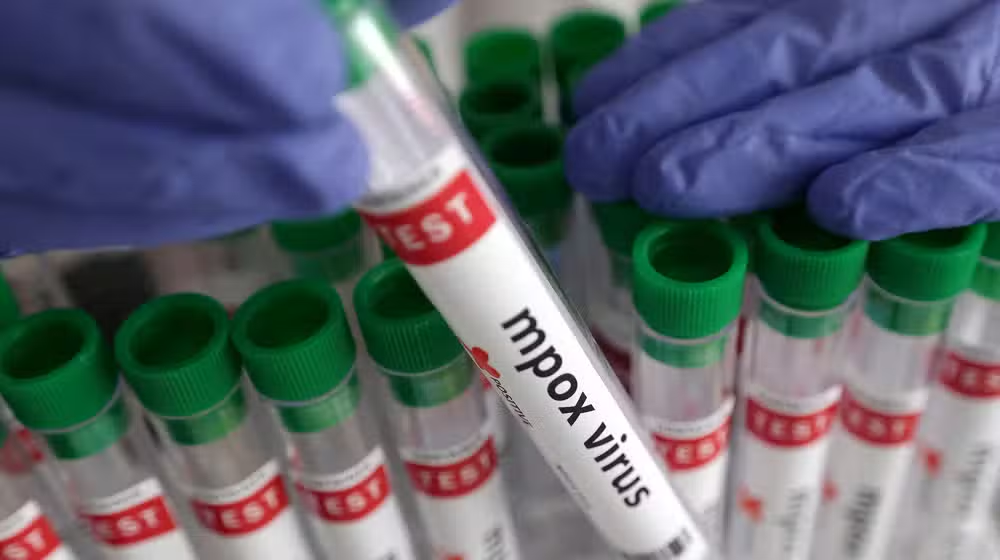
Health authorities in Khyber Pakhtunkhwa (KP) have issued a high-alert advisory to all public and private hospitals following a steady climb in mpox cases. With over two dozen infections confirmed in the province over the past year, the focus has shifted from travel-related monitoring to containing potential local transmission.
The provincial surveillance and diagnostic services have recorded a total of 26 confirmed cases recently, consisting of 18 men and 6 women. While the initial wave of infections was linked to individuals arriving from Gulf countries, the epidemiological pattern is changing.
A significant concern for health officials is the suspected cross-border movement of the virus from Punjab, which confirmed more than 25 cases late last year. This suggests that the virus is no longer just “imported” but is moving between provinces.
Perhaps the most critical update in the 2026 advisory is the evidence of community transmission.
- 2024 vs. 2025: Data shows a marked increase in cases over the last year.
- Early 2026: New detections have continued into the first quarter of this year.
- Lack of Travel History: Several recent patients have no history of international travel, suggesting the virus is circulating locally.
Without strengthened containment, authorities fear mpox could become endemic to the region.
The National Institute of Health (NIH) in Islamabad has provided consolidated guidelines to help clinicians identify and manage cases swiftly.
Key Symptoms to Watch For:
- Unexplained acute rash
- Fever and body aches
- Swollen lymph nodes (a hallmark of mpox)
- History of close contact with a suspected case
Action Plan for Healthcare Facilities:
- Immediate Isolation: Suspected patients must be isolated at the point of care while awaiting results.
- Specialized Screening: Dermatology, pediatrics, and sexual health clinics are requested to be extra vigilant, as these are often the first points of contact.
- Standardized Testing: Facilities must collect lesion swabs and refer them to the Public Health Reference Laboratory for real-time PCR testing.
- IPC Measures: Strict adherence to Infection Prevention and Control (IPC) protocols is mandatory to prevent hospital-based outbreaks.
The rise in cases across KP and Punjab signals a need for a more robust public health response. Early detection through laboratory confirmation and strict isolation are currently our best tools to break the chain of transmission.