

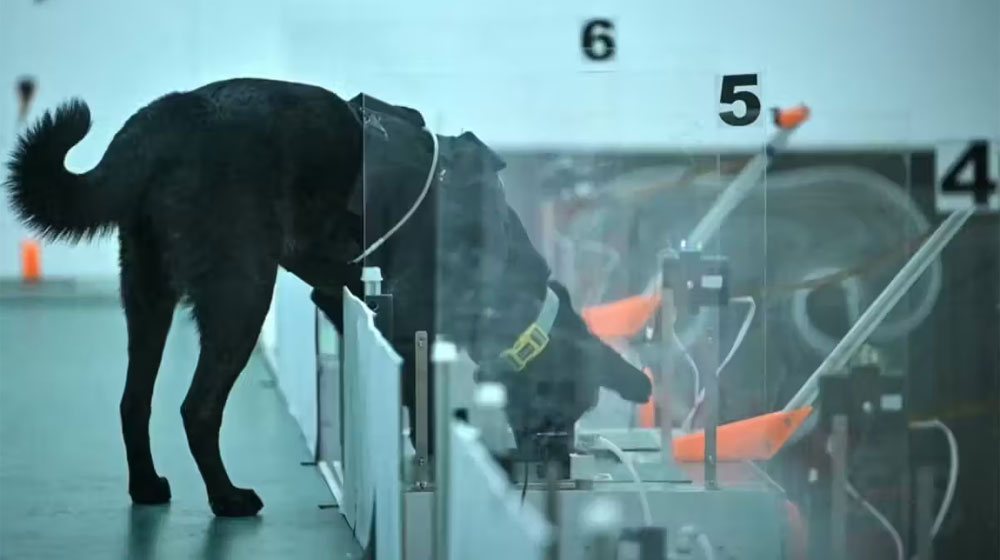
Rescue dog Chloe spends her days tumbling across a farm outside Bengaluru. However, she also spends part of her time learning to sniff human breath for cancer with help from AI. Fitted with a 3D-printed helmet and sensor-packed harness, Chloe is part of startup Dognosis’s effort to build a non-invasive cancer test. The company trains dogs to sniff out cancer by combining their natural scent detection with machine learning.
A growing body of global research shows dogs can detect cancer and other illnesses, including Parkinson’s disease and Covid-19, through scent alone. Dognosis analyzes the dogs’ brain activity, respiration and body language to turn their reactions into measurable data. Co-founder Akash Kulgod said the dogs can perform thousands of sniffs in an hour, with each sniff evaluating a separate sample. Dognosis hopes to launch commercially next year.
Early detection can make a crucial difference to cancer survival rates. Still, many patients in India receive a diagnosis only after the disease has advanced. Dog screening could provide an affordable first layer of testing deployed at scale. Therefore, it could flag potential cases for further medical evaluation. Dognosis is collaborating with government medical institutions as it seeks commercial approval.
Chloe is one of 15 dogs the startup is currently coaching. Each dog wears a customized data-gathering helmet during training sessions. Diseases alter the chemicals the body releases, creating distinctive odors that dogs learn to identify. Dogs possess around 300 million scent receptors, compared with roughly five million in humans. The testing method stays simple. A patient breathes into a cotton mask for about 10 minutes, and staff seal the mask in a bag before sending it to the lab.
A recent Dognosis study examined more than 1,500 participants across six hospitals in Karnataka state. Researchers published the findings in the Journal of Clinical Oncology. The company reported an accuracy rate exceeding 90 percent across seven major cancer types. Meanwhile, oncologists in Bengaluru who were not involved in the project offered cautious optimism about the results.
Most of the dogs involved are beagles, along with some Malinois and Shepherd mixes. Only the best-performing animals get selected for the program, according to Kulgod. Additionally, the team limits each dog’s working time to around 30 to 45 minutes a day. Instead of relying on a single breed, Dognosis draws from adoption centers and legal breeders alike. Finally, the company says its long-term goal centers on improving proactive and preventative medicine across India.