

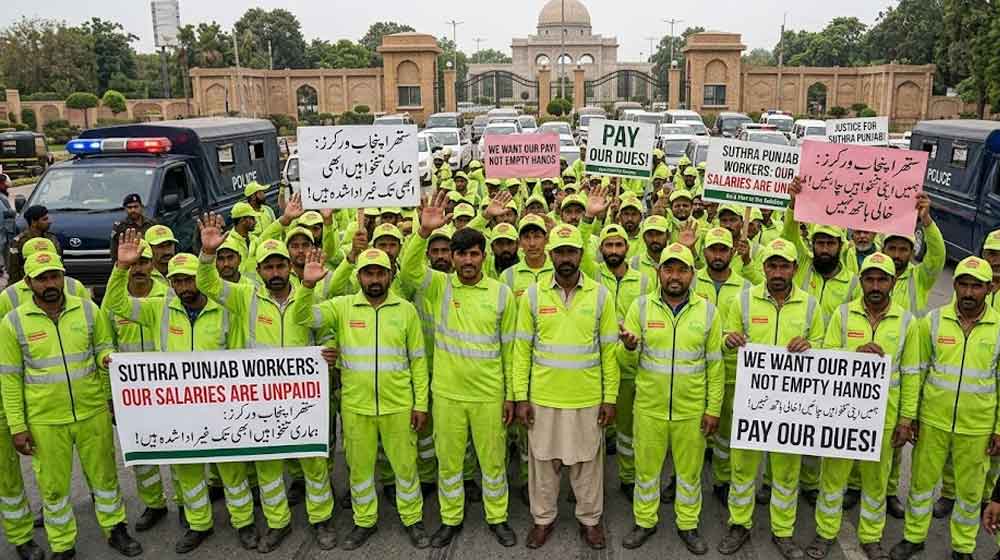
Sanitation workers have launched a massive demonstration that has paralyzed Lahore’s traffic system. The Suthra Punjab workers protest has brought the city’s traffic to a complete standstill, leaving thousands of commuters stranded for hours. The workers gathered on major thoroughfares to demand the immediate release of unpaid salaries and payment of long-overdue bonuses.
The demonstrators blocked key intersections and main roads throughout the city. Therefore, severe congestion and long queues of vehicles have formed, including buses, cars, and rickshaws. Additionally, the protest has disrupted normal urban movement significantly.
Protest leaders stated that despite multiple assurances from authorities, their financial grievances remain unaddressed. The workers, who are responsible for maintaining the city’s cleanliness, have made clear demands. Moreover, they vowed to continue their demonstration until the government provides a concrete timeline for payment of their dues. So the Suthra Punjab workers protest reflects accumulated frustration over repeated broken promises.
Traffic wardens have struggled to manage the gridlock as the protest spreads to several vital parts of the city. Motorists have reported being stuck for hours during their commutes. Additionally, many commuters are urging the provincial government to resolve the workers’ issues and restore normalcy. Therefore, the protest impacts not just workers but the entire urban population.
City administration officials have reportedly initiated talks with protesters to clear the roads. However, the deadlock continues as workers insist on immediate salary disbursement. The Suthra Punjab workers protest represents a critical test of government responsiveness to worker demands. So negotiations remain stalled over fundamental disagreement regarding payment timelines.
The sanitation workers perform essential services that keep Lahore clean and functional. Without their labor, waste accumulates rapidly and creates public health hazards. Therefore, their demands for timely payment are entirely justified. Moreover, government agencies have legal and moral obligations to pay workers for services rendered.
Delayed salary payments have become a recurring problem across multiple government departments and autonomous bodies. This pattern of non-payment erodes worker morale and incentivizes strikes. Additionally, it damages public service delivery across urban centers. So addressing the systemic issue requires government commitment to timely disbursement.
The impact on ordinary commuters adds political pressure on authorities. When traffic paralysis affects thousands of residents, public opinion shifts toward resolving worker grievances. Therefore, the government faces dual pressure: from workers demanding payment and from commuters demanding normal traffic flow. Finally, resolving the Suthra Punjab workers protest requires immediate action on salary disbursement and transparent communication about future payment schedules.