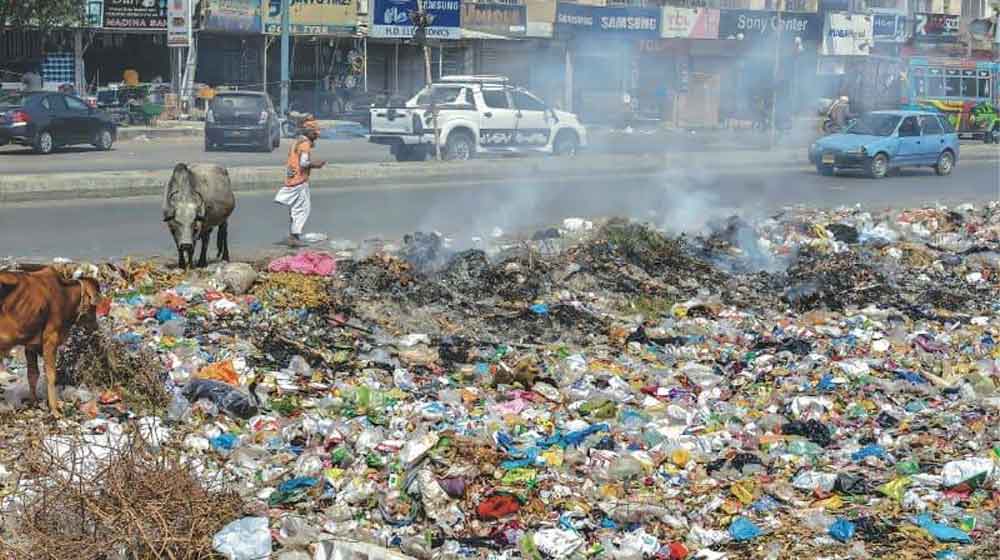
The Sindh Solid Waste Management Board has announced a major enforcement crackdown against environmental violators. The SSWMB has empowered its field officers to impose Karachi waste disposal fines ranging from Rs. 50,000 to Rs. 500,000 on individuals and businesses found violating waste disposal rules. This represents a significant escalation in enforcement efforts designed to improve cleanliness and reduce environmental pollution in Karachi.
SSWMB Managing Director Tariq Ali Nizamani said assistant directors working in the field now have official designation as inspectors under the Sindh Local Government Act. Therefore, they have the authority to take action against violators immediately. This gives the board teeth in enforcement that was previously lacking.
According to the board, Karachi generates more than 14,000 tonnes of municipal waste every day. Consequently, stronger enforcement has become necessary to discourage illegal dumping and improve waste management across the city. The scale of the waste problem makes regular penalties essential.
The SSWMB also plans to recommend linking the renewal of trade licenses to mandatory waste management training for businesses. The proposed program would educate business owners on waste segregation, recycling, and environmentally responsible disposal practices. Moreover, this approach tackles the problem at the source rather than just imposing penalties after violations occur.
In addition, the Sindh government has allocated 3,000 acres in Dhabeji for a modern landfill facility. This facility will scientifically dispose of municipal, industrial, and medical waste. Additionally, studies under the World Bank-funded Solid Waste Emergency & Efficiency Project are underway to develop long-term solutions for hazardous waste management. So infrastructure improvements are occurring alongside enforcement.
The board further proposed establishing designated animal sacrifice sites in every union committee before next Eid ul Adha. This move aims to improve waste collection and public hygiene across Karachi. Furthermore, officials recognize that seasonal events like Eid create massive waste spikes that require special preparation.
The Karachi waste disposal fines represent one component of a broader strategy. Enforcement alone won’t solve the waste crisis without infrastructure and education. Therefore, the SSWMB is pursuing multiple approaches simultaneously. The combination of penalties, training, and infrastructure investment should yield better results than enforcement alone.
Businesses should prepare for compliance immediately. The new fine structure means that violations now carry serious financial consequences. Moreover, regulatory compliance will soon become linked to business license renewal. So commercial operations have every incentive to implement proper waste management practices now.
Citizens should also prepare for increased scrutiny of their disposal practices. Illegal dumping in open spaces will now face substantial financial penalties. Additionally, the enforcement campaign will rely on inspectors throughout the city. Finally, residents who participate in environmental violations should expect consequences under the new enforcement regime.