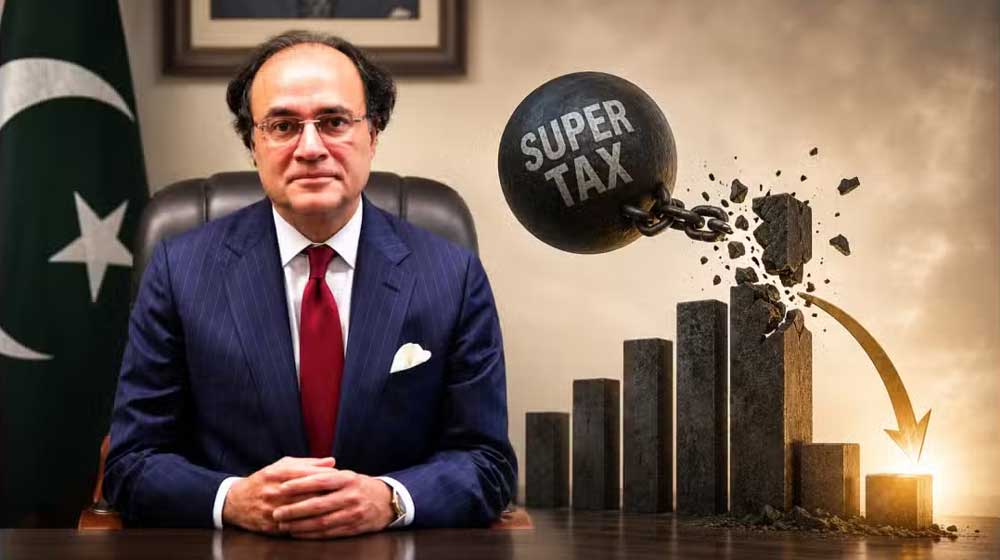
The super tax Pakistan phase out moves closer as the Finance Minister signals gradual elimination across income slabs
Pakistan’s business community has waited years to hear these words. Finance Minister Muhammad Aurangzeb has signaled the government’s intention to eventually abolish the super tax. Speaking during a meeting of the Senate Standing Committee on Finance, he confirmed the government’s direction was clear — the levy would phase out over time.
Aurangzeb added that authorities would continue creating fiscal space for further reductions every year. The remarks carry particular weight because they came just days after the government proposed fresh cuts in super tax rates as part of the Federal Budget 2026-27.
The super tax Pakistan phase out discussion has been building for some time. Business groups and investors have repeatedly called for the levy’s withdrawal, arguing it increases the cost of doing business and discourages investment. Originally introduced as a temporary revenue measure during a period of fiscal stress, the super tax has since become a significant and recurring source of government income.
During the same committee meeting, Senator Abdul Qadir proposed raising the income threshold for super tax exemption from Rs. 500 million to Rs. 1 billion. However, FBR Chairman Rashid Mahmood Langrial pushed back immediately. He warned that such a move would require the government to introduce an additional Rs. 250 billion in offsetting tax measures. Therefore, the proposal did not advance further during the session.
The exchange highlights the central tension around super tax reform. On one side, businesses and investors demand relief. On the other side, fiscal constraints under Pakistan’s broader reform agenda limit how quickly the government can act. Furthermore, any reduction in super tax revenue must find a replacement source — otherwise the fiscal deficit widens.
Still, the government has already taken concrete steps. The latest budget proposes gradual abolition of the super tax across several income slabs. Additionally, officials maintain that further reductions will follow as revenue collection improves and fiscal space expands.
For Pakistan’s corporate sector, the Finance Minister’s remarks represent meaningful progress. Moreover, the signal of eventual full abolition gives businesses something they have long lacked — a credible long-term trajectory on this particular tax burden. Whether the timeline proves realistic will depend heavily on how Pakistan’s broader revenue performance develops over the next several budgets.