Pakistan’s deforestation rate of 11,000 hectares per year threatens ecological balance, water security, and long-term economic stability
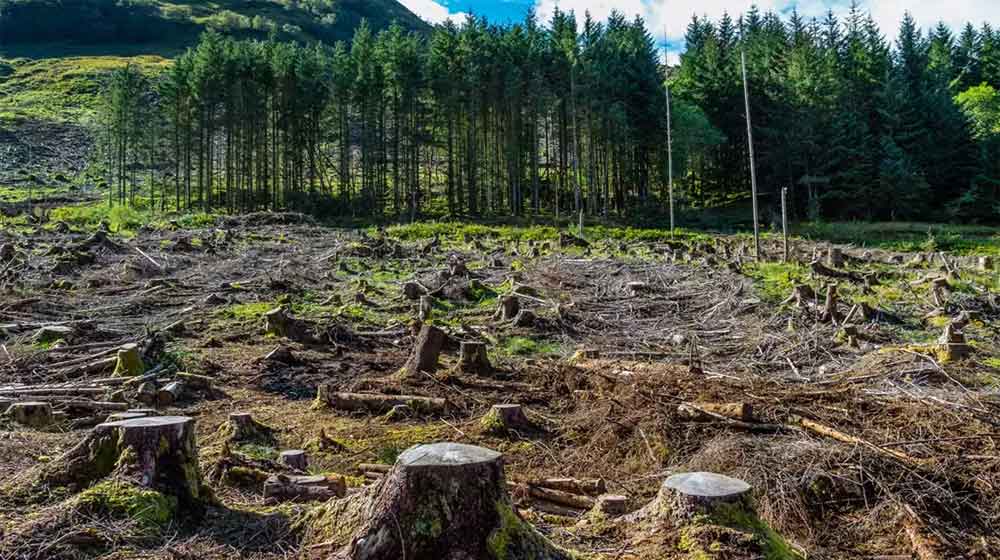
Pakistan is quietly losing a forest the size of a small city every single year. The Pakistan Economic Survey 2026 reveals that the country loses an estimated 11,000 hectares of forest area annually due to persistent deforestation. The findings paint a sobering picture of a nation struggling to protect one of its most vital natural assets.
Total forest area currently stands at around 4.11 million hectares. That covers only 4.7 percent of Pakistan’s total land area — a figure that falls well below international benchmarks for ecological sustainability. Furthermore, the survey warns that continued decline in forest cover poses serious risks to the country’s ecological balance.
Coniferous forests account for the largest share of existing cover. Scrub forests, riverine forests, mangroves, and irrigated plantation forests follow in that order. However, all these forest types remain under intense pressure despite their critical importance for environmental protection, biodiversity, water regulation, and local livelihoods.
The Pakistan deforestation rate carries consequences far beyond the environment. Although the forestry sector contributes only around 0.5 percent directly to GDP, its broader economic value tells a completely different story. The survey estimates the value of forest ecosystem services at 11.48 percent of GDP. These services include water regulation, biodiversity support, environmental protection, and livelihood benefits for millions of Pakistanis.
Therefore, every hectare lost represents a far larger economic cost than commercial timber value alone suggests. Low forest cover also links directly to Pakistan’s extreme vulnerability to climate change. Additionally, rapid land-use changes, population growth, rural poverty, and heavy dependence on natural resources all compound the problem.
The government is not sitting idle. The Ministry of Climate Change and Environmental Coordination is working with provincial and territorial governments on large-scale afforestation and ecosystem restoration initiatives. Moreover, the Green Pakistan Program sits at the center of these efforts, backed by a budget allocation of Rs. 122.15 billion.
The program has so far overseen the planting, regeneration, or distribution of nearly 2.26 billion plants across the country. Still, the gap between planting efforts and annual forest loss remains a serious concern. Planting billions of saplings means little if deforestation continues stripping mature forest cover at 11,000 hectares per year.
For Pakistan, protecting its forests is ultimately not just an environmental obligation — it is an economic necessity.