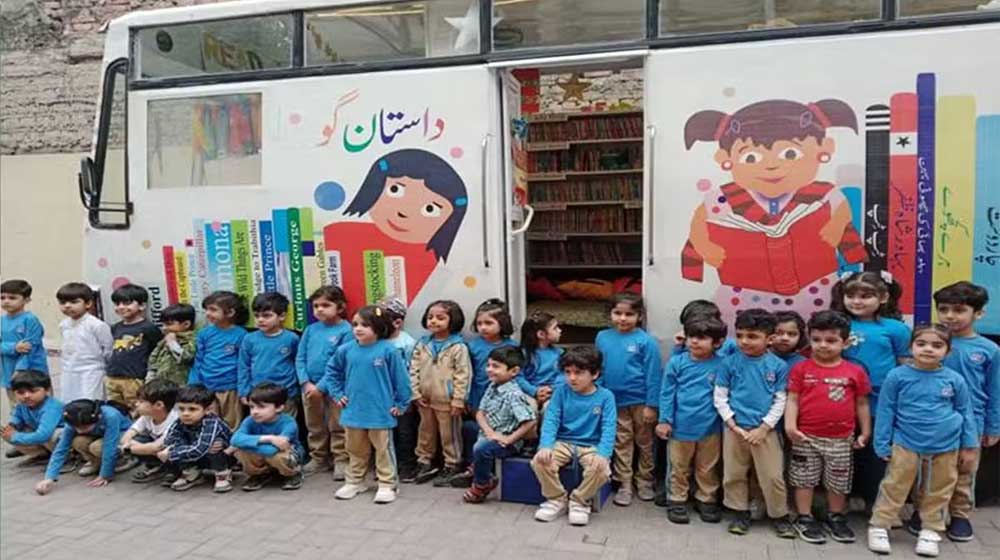
The Libraries on Wheels Lahore initiative will bring books, tablets, and digital learning to government schools across the city
Lahore is about to reimagine what a school library looks like. Punjab education authorities have launched a Libraries on Wheels project that will bring books and digital learning resources directly to government school students across the city. The initiative carries an estimated cost of Rs. 198 million.
At its core, the project replaces the traditional fixed library with something far more practical. Under the plan, 85 electric vehicles will be purchased and converted into fully equipped mobile libraries. Each vehicle will carry 20 modern tablets and feature a large LED screen to support interactive and digital learning activities.
The scheduling model is straightforward and efficient. Every mobile library will visit one school daily under a fixed timetable. Furthermore, the vehicles will charge overnight at designated charging stations set up within school premises, keeping operations smooth and cost-effective.
The Libraries on Wheels Lahore project targets one of the most persistent gaps in government school education — access to learning resources beyond the standard textbook. Many students in public schools have little to no exposure to supplementary books or digital educational content. Therefore, bringing both directly to their doorstep removes a barrier that has long held back reading habits and broader academic development.
CEO of the District Education Authority Tariq Mahmood confirmed that modern digital technology sits at the heart of the initiative. He added that both physical books and digital educational content will be available through every mobile library unit. Additionally, he expressed confidence that the project will encourage a genuine culture of reading among students who currently have limited access to such resources.
The District Education Authority expects the project to improve the overall quality of education in government schools. Moreover, the combination of physical books and digital tools gives teachers a versatile resource to support classroom learning in new ways.
Lahore’s approach here is practical and scalable. If the model delivers results, it could serve as a template for similar initiatives across other districts in Punjab. For now, the city’s government school students stand to gain something genuinely valuable — a library that comes to them.